The Ultimate Fitness Checklist for Rugby Players (2026)
The complete fitness checklist for Rugby Players. Everything you need to set up, track, and optimise your training and nutrition — all in one place.
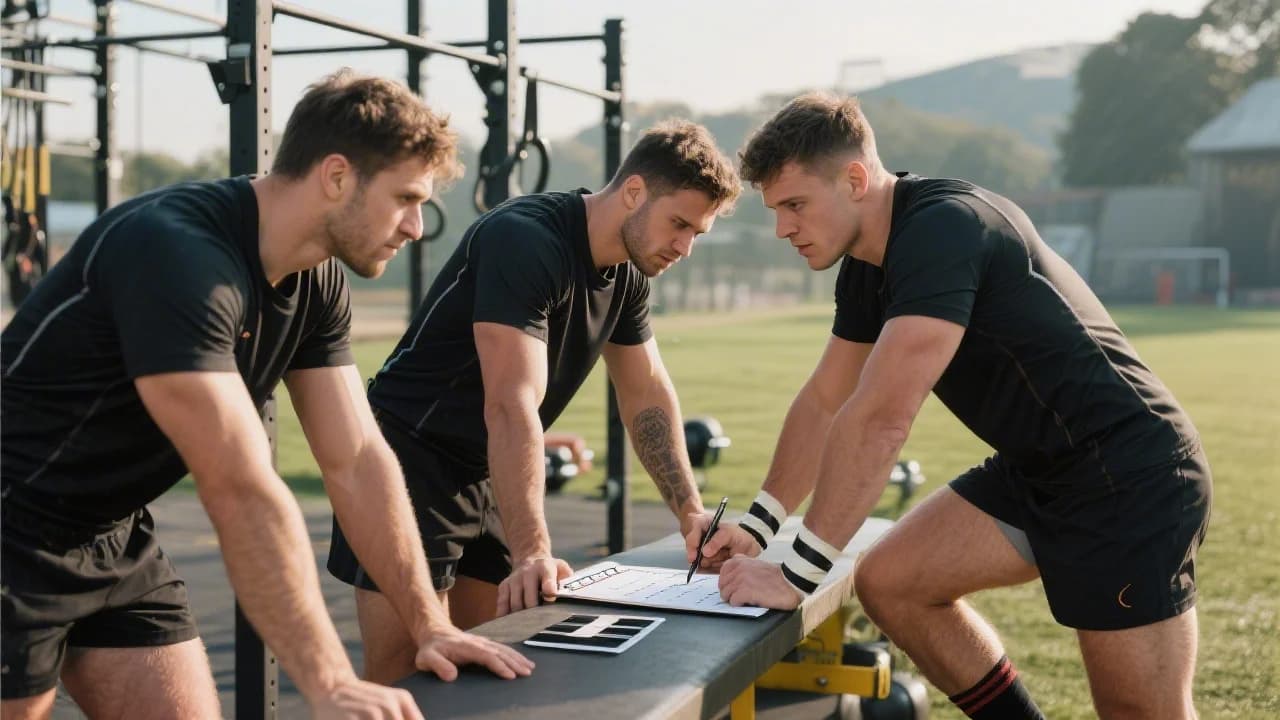
As an amateur or club rugby player, you know the demands of the game are immense. You're not just training for fitness; you're building a physique and an engine capable of withstanding repeated collisions, explosive sprints, and sustained effort. Many players struggle to gain the necessary 5-10kg of lean mass to compete physically, often underestimating the sheer volume of calories required – typically 3,500-5,000 per day – to fuel high training loads and recovery. This often leads to feeling undersized or running out of steam in the final quarter. You might also be grappling with the unique injury risks of contact positions, particularly around the neck and shoulders, or struggling to adapt your training as you transition from the intense in-season grind to off-season development. This checklist is your strategic roadmap, designed to address these exact pain points. It provides a structured approach to not only hit your caloric targets and build functional strength but also to enhance your repeated sprint endurance, ensuring you're a force to be reckoned with from the first whistle to the last. By following these steps, you'll close the gaps in your current approach, moving beyond generic fitness advice to a rugby-specific strategy that delivers tangible results on the field.
Why This Matters for Rugby Players
For rugby players, consistency and structure aren't just beneficial; they're non-negotiable for performance and injury prevention. Missing key steps in your nutrition or training can lead to under-fuelling, which directly impacts your ability to gain mass, recover between brutal training sessions and games, and maintain high intensity for the full 80 minutes. Under-recovery also significantly increases your risk of common rugby injuries, like strains or concussions, sidelining you when your team needs you most. A structured approach, reinforced by tracking, ensures you're consistently hitting the caloric surplus needed for mass gain and progressively overloading your strength and conditioning. FitFlow's Smart Workout Tracking provides 1,000+ guided exercises with video demos, ensuring proper form for rugby-specific movements, while Progress Analytics allows you to track weight, body fat, and PRs, visually demonstrating your mass gain and strength improvements. This continuous feedback loop from FitFlow reinforces the habits in this checklist, keeping you accountable and motivated to achieve your goals of gaining 5-10kg of lean mass and lasting the full game.
Dominate the pitch and outwork your opponents. This comprehensive checklist is engineered specifically for amateur and club rugby players, guiding you to build crucial size, tackle strength, and the relentless endurance needed to perform at your peak for 80 minutes.
Training & Conditioning
These foundational movements build the full-body strength and power essential for tackling, rucking, and scrummaging in rugby.
Rugby demands the ability to repeatedly sprint at high intensity throughout a game, not just once; RSA training directly improves this.
Crucial for reducing concussion risk and preventing common contact injuries in the scrum, tackle, and ruck.
Explosive power is vital for breaking tackles, winning collisions, and accelerating into space on the pitch.
Enhances range of motion for better performance in contact, reduces injury risk, and aids recovery from intense sessions.
Consistent tracking helps you see strength gains, identify plateaus, and adjust your program to keep building mass and power.
Nutrition & Fuelling
A significant caloric surplus is non-negotiable for rugby players aiming to gain 5-10kg of lean mass and fuel intense training.
Essential for muscle repair, growth, and recovery, especially crucial after heavy lifting and contact training.
Carbohydrates are the primary fuel source for high-intensity, repeated sprint efforts required in rugby.
Simplifies the daunting task of tracking high caloric intake, making it easier to maintain a consistent surplus for mass gain.
Supports overall health, hormone balance, and provides a dense energy source for the demands of contact sport.
Helps ensure you consistently hit your high caloric targets throughout the day, preventing under-fuelling.
Proactive meal planning prevents last-minute poor choices and ensures optimal nutrient timing for performance and recovery.
Recovery & Injury Prevention
Sleep is paramount for muscle repair, hormone regulation, cognitive function, and overall recovery from the physical demands of rugby.
Proper hydration is critical for performance, nutrient transport, and preventing muscle cramps and fatigue during intense rugby sessions.
Helps flush metabolic waste, reduces DOMS, and promotes faster recovery without adding significant stress to the body.
Minimises muscle damage and soreness, allowing for quicker bounce-back between weekly games and midweek training.
Proactive injury management is key for rugby players to stay on the pitch and prevent minor issues from escalating.
Mental fatigue can impact physical performance and decision-making on the field; managing stress aids holistic recovery.
Performance & Tracking
Essential for ensuring you're gaining the right kind of mass (muscle, not just fat) to compete physically.
Helps balance the demands of club training, games, and personal S&C, preventing burnout and injury.
Specific goals provide direction and motivation, aligning your training and nutrition efforts for tangible rugby improvements.
Monitoring overall activity helps ensure you're maintaining a high energy expenditure to justify your caloric intake for mass gain.
Connects your physical training to actual game scenarios, helping you understand where your fitness needs to improve.
Adds a competitive edge to your off-field training, fostering consistency and pushing you to achieve more.
Seasonal Adjustments
The off-season is the prime time to make significant gains in size and strength without the demands of weekly games.
Pre-season is critical for building the match fitness and rugby-specific endurance needed to hit the ground running for September kick-off.
Prevents detraining and maintains peak physical capacity throughout the demanding club season.
Ensures you're always adequately fuelled for your current training phase, whether gaining mass or maintaining peak fitness.
Leverages seasonal hooks to boost motivation and keep training engaging during a key period for rugby fans.
Frequently Asked Questions
Track Your Progress with FitFlow
Join 50,000+ users — including thousands of Rugby Players — hitting their goals faster with AI-powered tracking.
Download FitFlow Free