The Ultimate Fitness Checklist for Triathletes (2026)
The complete fitness checklist for Triathletes. Everything you need to set up, track, and optimise your training and nutrition — all in one place.
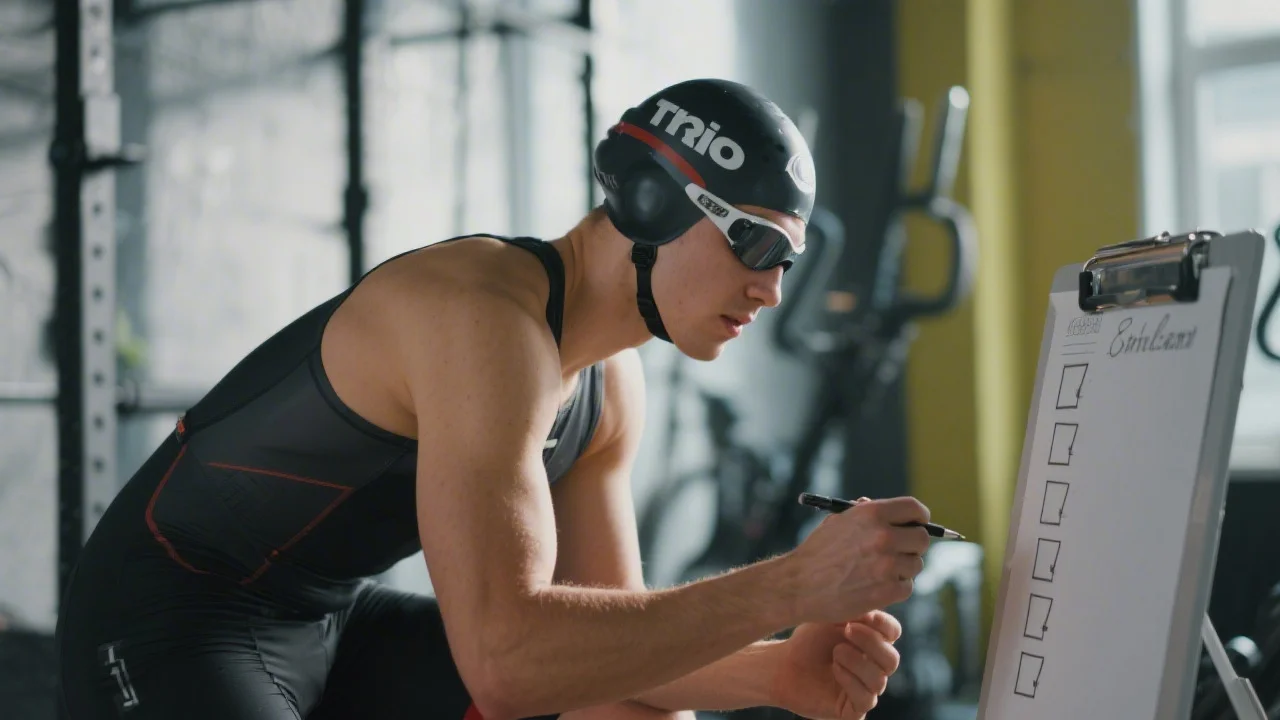
So, you're a triathlete, juggling early morning swims, long weekend rides, and brick runs, all while trying to maintain a semblance of a normal life. You know the struggle: coordinating swim, bike, and run volume without overtraining, nailing race nutrition to avoid the dreaded bonk or GI issues, and finding time for strength work and recovery. Many triathletes, especially those aiming for their first Olympic or Ironman, often fall into the trap of 'just doing more' without a structured plan, leading to injuries, burnout, or a disappointing race day. In fact, studies show that overtraining syndrome affects up to 60% of endurance athletes at some point in their careers. This checklist is designed specifically for you. It addresses the common gaps in unstructured training, offering a clear, actionable path to build your aerobic engine efficiently across all three disciplines, manage brick workout fatigue, and master transition training. By following these steps, you'll not only improve your finish times but also ensure your training is sustainable, allowing you to enjoy the journey and maintain a social life amidst heavy training blocks. Consider this your blueprint for a successful season, whether you're eyeing the Ironman World Championship hype or gearing up for spring triathlon season.
Why This Matters for Triathletes
For triathletes, consistency and structure aren't just buzzwords; they're the bedrock of performance and injury prevention. The multi-sport demands mean that missing key steps—whether it's a critical long ride, a specific swim drill, or consistent strength work—can have a cascading negative effect across all disciplines. Neglecting race-day nutrition planning, for instance, can lead to debilitating GI issues or 'bonking' during a 4-12 hour event, turning months of hard work into a DNF. Similarly, haphazardly increasing volume without proper recovery or periodization can quickly lead to overtraining, fatigue, and injury, sidelining you completely. This checklist provides the framework to avoid these pitfalls. By systematically ticking off these items, you build robust habits that support your ambitious goals. Tracking your progress diligently with FitFlow, leveraging its multi-sport tracking via Apple Health and Garmin integrations, and visualizing your fitness gains through detailed charts for multi-discipline fitness, reinforces these habits. It allows you to see the tangible results of your structured approach, motivating you to stay consistent and make data-driven adjustments to your high-calorie training day meal plans and workout scheduling for periodised blocks.
Conquering a triathlon, whether it's your first sprint or another Ironman, demands meticulous planning across swim, bike, and run. This checklist provides triathletes with the essential steps to optimize training, nutrition, and recovery, ensuring you hit your race goals without burnout.
Training & Planning Essentials
A structured plan prevents overtraining and ensures you peak optimally for your target sprint, Olympic, or Ironman race.
This is crucial for adapting your legs to the unique fatigue of running off the bike, a key triathlete pain point.
Builds resilience, prevents injuries, and improves power output across all three disciplines, especially important for long-distance events.
Accurate tracking of swim, bike, and run volume is vital for managing load and preventing overtraining, especially during heavy blocks.
Efficient transitions save valuable time and reduce stress on race day, a critical skill often overlooked by beginners.
Helps maintain range of motion, reduces muscle stiffness, and aids recovery from high-volume training.
Nutrition & Hydration Strategy
Adequate fueling is paramount for recovery and performance, preventing 'bonking' during long sessions and ensuring energy stores are topped up.
Crucial for avoiding GI issues and ensuring your body can process fuel effectively during a 4-12 hour event.
Dehydration significantly impacts performance and recovery, especially for triathletes training in varied conditions.
Simplifies tracking complex multi-sport nutrition and ensures you meet high-calorie training day meal plan requirements with 95%+ accuracy.
Find what works best for your stomach to prevent unexpected GI distress during your sprint, Olympic, or Ironman.
Optimizes muscle repair and glycogen replenishment, accelerating recovery for the next training session.
Expert guidance can fine-tune your Ironman nutrition strategy and prevent common pitfalls.
Recovery & Wellness
Adequate sleep is fundamental for muscle repair, hormonal balance, and mental recovery from intense multi-sport training.
Essential for preventing overtraining, allowing your body to adapt and rebuild stronger across swim, bike, and run disciplines.
Promotes blood flow, reduces muscle soreness, and aids recovery without adding significant training stress.
Provides insights into recovery status and helps identify signs of overtraining before they become problematic.
Helps alleviate tight spots and improve tissue quality, reducing injury risk from high-volume training.
Allows for mental and physical rejuvenation, preventing burnout and setting you up for a stronger next season.
Equipment & Logistics
Proper bike fit prevents injuries, improves efficiency, and enhances comfort during long rides, especially critical for Ironman distances.
Essential for buoyancy, warmth, and speed in open water swims, often required for sprint, Olympic, and Ironman races.
Prevents unexpected chafing, discomfort, or logistical issues on race day.
Reduces pre-race anxiety and allows you to execute your strategy smoothly, especially for complex Ironman events.
Ensures you don't forget critical items and reduces stress on race morning.
Self-sufficiency on the road is crucial for triathletes, especially on long, remote training routes.
Mental Toughness & Community
Mental preparation is as important as physical for enduring the demands of a triathlon, especially Ironman distances.
Provides motivation, accountability, and a supportive community to navigate the challenges of multi-sport training.
Focusing on daily actions (e.g., consistency, nutrition) helps maintain motivation during long training blocks.
Maintaining a social and family life during heavy training blocks is a common pain point; communication helps manage expectations and gain support.
Boosts morale and reinforces positive habits, crucial for staying motivated through the long haul of triathlon training.
Frequently Asked Questions
Track Your Progress with FitFlow
Join 50,000+ users — including thousands of Triathletes — hitting their goals faster with AI-powered tracking.
Download FitFlow Free