The Ultimate Fitness Checklist for Bodyweight / Calisthenics Athletes (2026)
The complete fitness checklist for Bodyweight / Calisthenics Athletes. Everything you need to set up, track, and optimise your training and nutrition — all in one place.
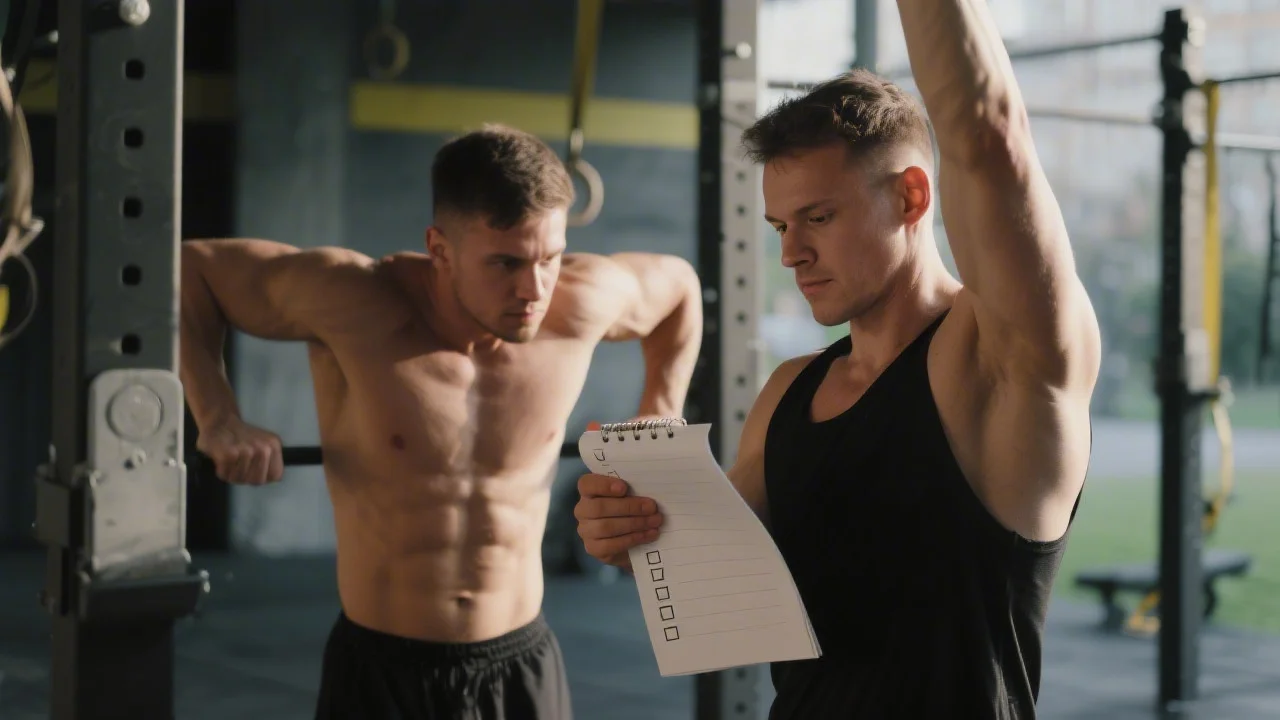
As a bodyweight or calisthenics athlete, you're not just working out; you're sculpting a masterpiece with your own body, pushing the boundaries of strength, balance, and control. This unique path, often pursued without traditional gym access, comes with its own set of challenges. You might be stuck at 5 pull-ups, struggling to see a clear progression from beginner to advanced skills, or battling elbow and shoulder tendinitis from overuse in pulling patterns. Many calisthenics enthusiasts also grapple with how to effectively program skill work alongside strength volume, or how to fuel muscle growth with nutrition tailored to their specific training demands. It's common to feel lost without a structured roadmap, with studies showing that athletes without clear goal setting and tracking are significantly less likely to achieve their performance targets. This checklist is designed to cut through the confusion, providing a systematic framework to address these common gaps. It will guide you through essential steps for skill acquisition, injury prevention, and optimal nutrition, ensuring you have a clear, actionable path to progress through calisthenics skill tiers and achieve impressive feats like the muscle-up, planche, or handstand push-up.
Why This Matters for Bodyweight / Calisthenics Athletes
For bodyweight athletes, consistency and structure aren't just beneficial; they're absolutely critical for breaking through plateaus and preventing injuries. Without a systematic approach, you risk stagnation on foundational movements, making those advanced skills like the planche or muscle-up seem unattainable. Missing key steps in progression can lead to frustrating overuse injuries like tendinitis, sidelining your progress for weeks or even months. Furthermore, neglecting proper nutrition, especially protein intake, can severely hinder muscle growth and recovery, making it harder to build the strength needed for complex skills. Tracking your progress, a core feature of FitFlow, reinforces these habits by providing tangible evidence of your efforts. Seeing your reps, sets, and personal records (PRs) improve visually through FitFlow's Progress Analytics fuels motivation and helps you identify what's working and what needs adjustment. This structured tracking transforms abstract goals into concrete achievements, keeping you accountable and consistently moving forward on your calisthenics journey.
Ready to unlock that muscle-up or achieve a solid planche? This checklist is your definitive guide to mastering bodyweight skills, building an impressive physique, and systematically progressing without a gym. Stop plateauing and start achieving your calisthenics dreams today.
Foundational Strength & Skill Development
These are the fundamental core tension patterns for almost all calisthenics skills, from handstands to muscle-ups, providing a stable base and preventing energy leaks.
This is a key benchmark for upper body pulling strength, crucial for progressing to advanced variations and skills like the muscle-up. FitFlow's Smart Workout Tracking helps you log and track reps.
A strong push-up foundation is vital for handstand push-ups, planches, and dips, ensuring balanced pushing strength and shoulder stability.
Develops immense core and hip flexor strength, essential for skills like the planche, front lever, and overall body control.
Builds shoulder endurance, wrist strength, and spatial awareness, laying the groundwork for freestanding handstands and handstand push-ups.
To break plateaus (e.g., stuck at 5 pull-ups), you need to systematically increase difficulty, reps, sets, or decrease rest, just like with weights. FitFlow's tracking makes this easy.
Programming & Tracking
Random workouts lead to slow progress. A structured program ensures balanced development, adequate recovery, and systematic skill progression. FitFlow offers customisable journeys.
Skills like planche or muscle-up require fresh nervous system and focused practice. Separating them from high-volume strength work optimizes learning.
This is crucial for identifying plateaus, celebrating PRs, and making informed adjustments to your training volume and intensity. FitFlow's PR tracking is invaluable.
Seeing your progress visually is incredibly motivating and confirms your hard work is paying off. FitFlow's Progress Analytics helps track these milestones.
Crucial for preventing overtraining, allowing your body to recover, and avoiding injuries like elbow tendinitis, ensuring long-term progress.
Ensures correct form for new calisthenics skills and variations, preventing injury and maximizing effectiveness, especially crucial when learning complex bodyweight movements.
Nutrition & Recovery
Essential for muscle repair and growth, especially when training frequently with bodyweight. FitFlow's AI Food Scanning and barcode scanning make tracking easy.
Achieving an impressive physique requires precise fueling. FitFlow's 14M+ item database helps manage your caloric balance for muscle building or cutting.
Muscle repair, hormone regulation, and nervous system recovery are optimized during sleep, directly impacting strength gains and skill acquisition.
Crucial for joint health, nutrient transport, and overall performance, especially during intense outdoor bar season workouts.
Prevents common calisthenics injuries like elbow and shoulder tendinitis, improves range of motion for skills, and enhances recovery.
Bodyweight athletes need precise nutrition for muscle growth without traditional gym context. This feature simplifies hitting protein goals.
Creatine can enhance strength output and aid in recovery, beneficial for high-intensity bodyweight training.
Injury Prevention & Longevity
Prepares muscles and joints for activity, increasing blood flow and reducing the risk of strains and injuries common in demanding calisthenics.
Balances muscle development around joints, preventing imbalances that lead to overuse injuries like elbow tendinitis from excessive pulling.
Pushing through pain can lead to serious injuries and extended downtime, hindering long-term progress. Recovery is as important as training.
Helps reduce muscle soreness, improve blood flow, and speed up recovery without adding significant stress to the body.
Critical for handstand work, planche, and preventing impingement or tendinitis in these frequently stressed joints.
Sacrificing form for reps is a direct path to injury and inefficient training. FitFlow's video demos help reinforce correct technique.
Mindset & Community
Specific goals provide direction and motivation, making the path to complex skills like the muscle-up or planche feel achievable.
Calisthenics progression can be slow; acknowledging every step, no matter how small, keeps motivation high and prevents burnout. FitFlow's achievements help.
Sharing experiences, tips, and challenges provides invaluable support, inspiration, and new ideas for training and skill progression. FitFlow's leaderboards and sharing features can help.
These features provide external motivation and a sense of community, crucial for staying consistent during long skill acquisition phases.
Mastering advanced bodyweight skills is a marathon, not a sprint. Consistency over years, not weeks, yields the best results.
Frequently Asked Questions
Track Your Progress with FitFlow
Join 50,000+ users — including thousands of Bodyweight / Calisthenics Athletes — hitting their goals faster with AI-powered tracking.
Download FitFlow Free