The Ultimate Fitness Checklist for Rock Climbers (2026)
The complete fitness checklist for Rock Climbers. Everything you need to set up, track, and optimise your training and nutrition — all in one place.
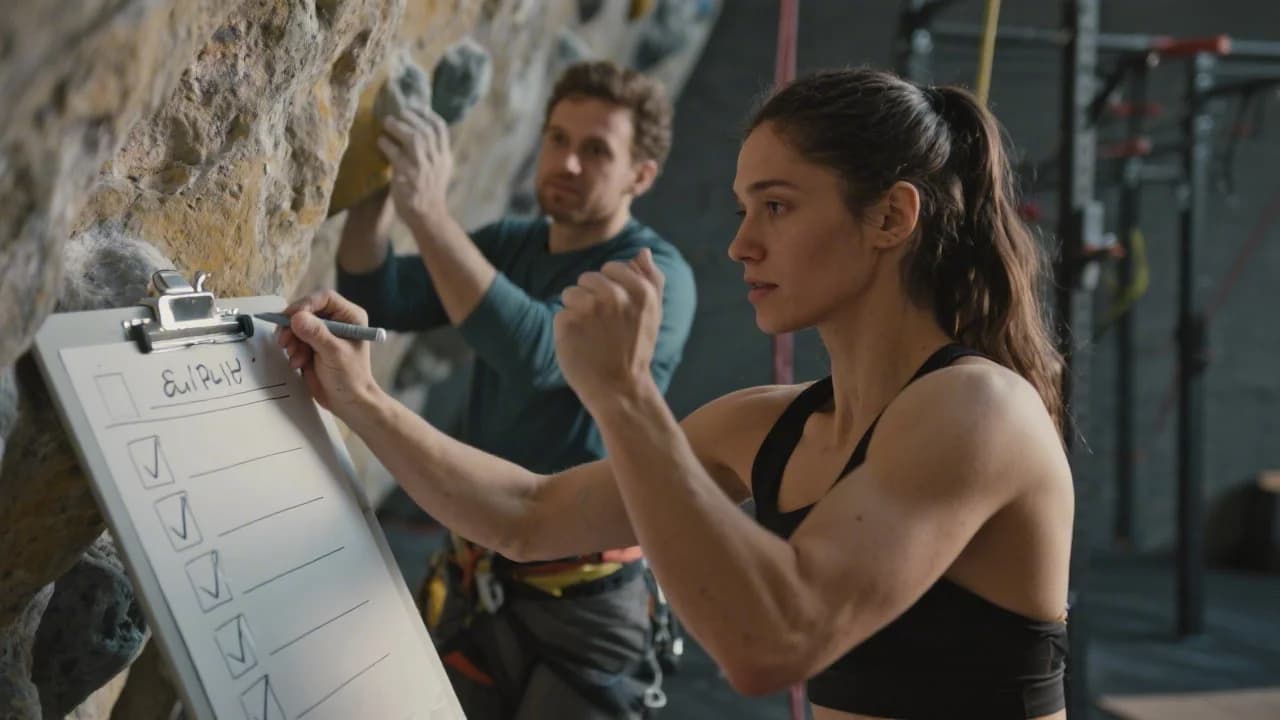
As a rock climber, you're constantly pushing your limits, whether it's on a crimpy boulder problem or a long sport route. But are you training smart, or just climbing hard? Many climbers, from seasoned veterans to enthusiastic beginners, often overlook crucial aspects of off-wall training, leading to plateaus, burnout, and the dreaded finger pulley injury. You might be spending hours on the hangboard, but neglecting antagonist muscle balance, or meticulously tracking your sends without logging your protein intake.
This checklist is designed specifically for you – the climber who wants to progress grades, improve finger strength, and prevent common injuries like tendonitis. We understand your pain points: the constant battle against weak antagonist muscles, the challenge of building strength-to-weight ratio without sacrificing energy, and the limited time for off-wall training between intense climbing sessions. This guide addresses these gaps by providing a structured, actionable framework for your training and nutrition. Did you know that over 50% of climbing injuries affect the upper extremities, with fingers being the most common site? A balanced training approach, as outlined here, is your best defense. By systematically working through these items, you'll build a more resilient, powerful, and efficient climbing machine.
Why This Matters for Rock Climbers
For rock climbers, consistency and structure aren't just buzzwords; they're the bedrock of progression and injury prevention. Missing key steps in your training, especially antagonist work or proper recovery, can lead to imbalances that manifest as debilitating finger or elbow injuries, sidelining you for weeks or even months. Without a structured approach, you risk overtraining, under-recovering, and ultimately, hitting frustrating plateaus that prevent you from reaching the next grade. Imagine the cost of a finger injury – not just the physical pain, but the mental toll of being unable to climb.
This checklist provides that essential structure. By consistently ticking off these items, you're building a robust foundation for sustained performance. Tracking your progress with FitFlow, from your antagonist workout sets and reps to your daily protein intake via AI Food Scanning, reinforces these vital habits. Visual charts in FitFlow's Progress Analytics will show your strength benchmarks improving, motivating you to stay on track and ensuring you're not just climbing hard, but climbing smart and safely.
Ready to send your next project? This ultimate fitness checklist for rock climbers is your roadmap to stronger fingers, explosive pulling power, and injury-free progression. Optimise your training, nutrition, and recovery to crush your climbing goals.
Training Foundations
Prepares your fingers, shoulders, and core for the demands of climbing, reducing injury risk.
Counteracts the pulling-dominant nature of climbing, preventing elbow tendonitis and shoulder imbalances. FitFlow's Smart Workout Tracking offers guided exercises for push-ups, tricep extensions, and shoulder presses.
Directly improves grip and finger power, crucial for progressing on harder routes and boulders.
A strong core is vital for stability, control, and efficient movement on the wall, especially on overhanging terrain.
Improves range of motion, allowing for better body positioning and reducing strain on joints.
Helps identify strengths, weaknesses, and objectively measures progress towards your next grade.
Nutrition & Recovery
Essential for rebuilding torn muscle fibers from intense climbing and training, crucial for strength gains. FitFlow's AI Food Scanning helps you hit your macro targets with ease.
Supports joint health, muscle function, and overall energy levels, preventing fatigue during long sessions.
Crucial for hormonal balance, muscle recovery, and central nervous system repair, directly impacting performance.
Promotes blood flow, reduces muscle soreness, and aids in flushing metabolic waste, speeding up recovery.
Optimises the anabolic window for muscle repair and glycogen replenishment after strenuous climbing.
Ensures you're fueling performance without excessive weight gain, critical for climbing efficiency. FitFlow's AI Food Scanning makes this precise.
Injury Prevention & Management
Ignoring fatigue is a direct path to overtraining and common climbing injuries like finger pulley strains.
Releases tension in overused climbing muscles, improving circulation and reducing risk of tendinopathy.
Directly combats 'climber's elbow' (medial epicondylitis) by balancing muscle groups around the elbow.
Provides support to finger pulleys and tendons, allowing for continued training with reduced risk of aggravation.
Stabilises the shoulder joint, crucial for powerful pulling movements and preventing impingement.
Early detection of symptoms like persistent fatigue or performance decline can prevent serious injury.
Advanced Training & Periodisation
Optimises adaptations for different climbing demands and prevents plateaus, especially for outdoor season.
Develops explosive power needed for dynamic moves and powerful lock-offs on challenging routes.
Ensures well-rounded finger strength and adaptability for various rock types and hold styles.
Improves focus, reduces performance anxiety, and helps 'redpoint' projects by rehearsing sequences.
Identifies subtle inefficiencies in movement, body positioning, or beta that can unlock your next grade.
Tailors your off-wall training to target weaknesses like lock-off power or body tension, with video demos for every exercise.
Lifestyle & Gear
Lighter climbers often have an advantage, but losing body fat too fast can impair strength. FitFlow's Progress Analytics helps track this balance.
Ensures safety and longevity of crucial equipment, preventing dangerous failures.
Aids in reflecting on sessions, identifying patterns, and tracking long-term progress beyond just grades.
Learning from others and having a supportive network enhances both enjoyment and progression. FitFlow's leaderboards and challenges can also provide motivation.
Maintains general fitness, active recovery, and provides a mental break from intense climbing-specific training.
Provides a comprehensive view of your activity, sleep, and recovery data, crucial for informed training decisions.
Frequently Asked Questions
Track Your Progress with FitFlow
Join 50,000+ users — including thousands of Rock Climbers — hitting their goals faster with AI-powered tracking.
Download FitFlow Free