The Ultimate Dumbbell-Only Full Body Workout You Can Do at Home
Reviewed by the fitness & nutrition editorial team · Certified personal trainers & nutrition coaches
The Science of Minimalist Training: Why Dumbbells Are Enough
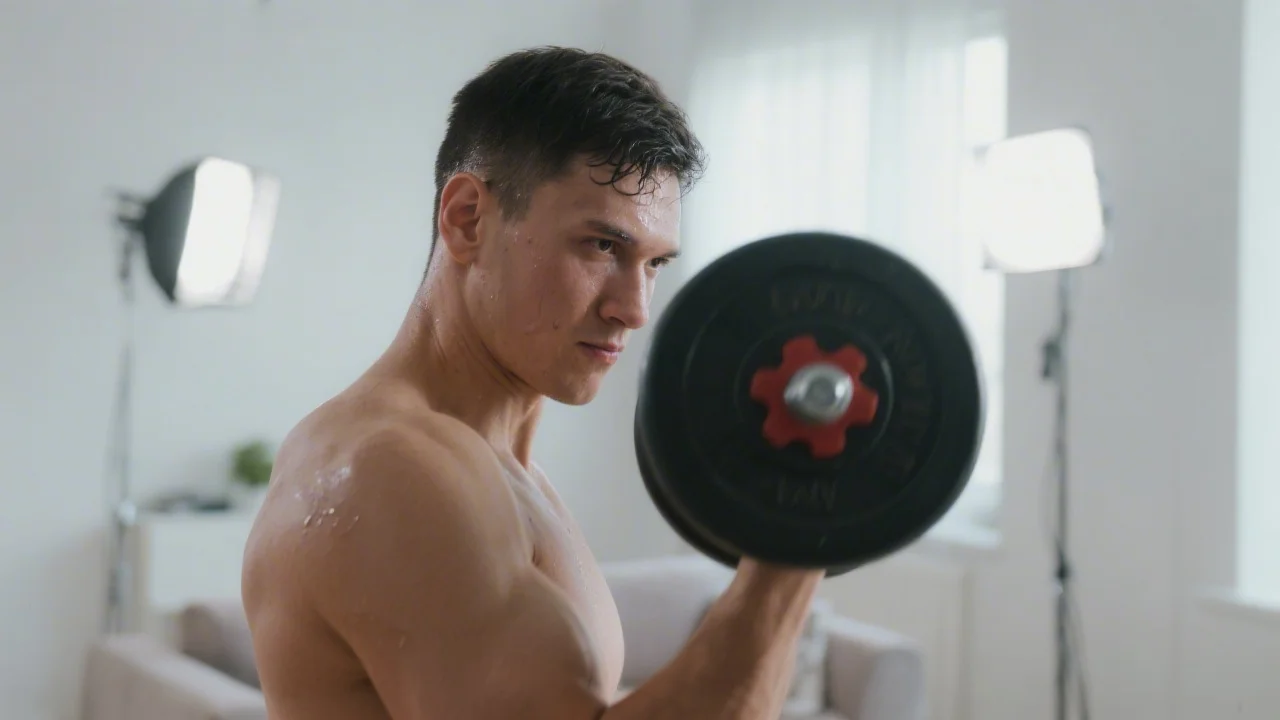
For years, the fitness industry perpetuated the myth that serious muscle growth required a warehouse full of specialized machinery and heavy iron plates. However, exercise physiology tells a different story. Your muscles do not have eyes; they cannot distinguish between a $5,000 leg press machine and a pair of heavy dumbbells. They only respond to mechanical tension, metabolic stress, and muscle damage. These are the three primary drivers of hypertrophy (muscle growth), and they can all be triggered effectively using nothing but dumbbells.
Research published in the Journal of Strength and Conditioning Research has consistently shown that free weights, particularly dumbbells, offer a unique advantage: increased muscle activation. Because dumbbells require you to stabilize each limb independently, they recruit more stabilizer muscles and core fibers compared to machines or even barbells. This 'freedom of movement' allows for a more natural range of motion, which can reduce the risk of joint impingement and address muscular imbalances—where one side of the body is stronger than the other.
The Power of High-Frequency Training
When training at home with limited equipment, a full-body routine performed three to four times per week is often superior to a traditional 'body part split.' By hitting every major muscle group in a single session, you keep protein synthesis elevated throughout the entire week. For the busy professional or the home-based athlete, this efficiency is the key to long-term consistency. To ensure you stay on track, FitFlow’s Smart Workout Tracking system can help you manage these frequent sessions, providing real-time guidance on sets and reps so you never feel lost in your own living room.
"Consistency is the bedrock of physical transformation. By removing the friction of a gym commute and utilizing versatile tools like dumbbells, you create a sustainable environment for success."
In this guide, we will break down a comprehensive routine designed to hit your quads, hamstrings, glutes, chest, back, shoulders, and core. We will also explore how to utilize progressive overload—the gradual increase of stress placed upon the body—to ensure you don't hit a plateau even with a fixed set of weights.
Mastering Form and Technique for Maximum Safety
Before lifting a single pound, it is crucial to understand that at-home training requires a higher degree of self-awareness. Without a coach standing over you, the responsibility of maintaining perfect form falls on your shoulders. Poor mechanics not only lead to injury but also 'leak' tension away from the target muscle, rendering your hard work less effective. The 'mind-muscle connection' is not just a bodybuilding cliché; it is a neurological reality where you consciously focus on the contraction of the specific muscle you are working.
Utilizing Visual Cues and Guidance
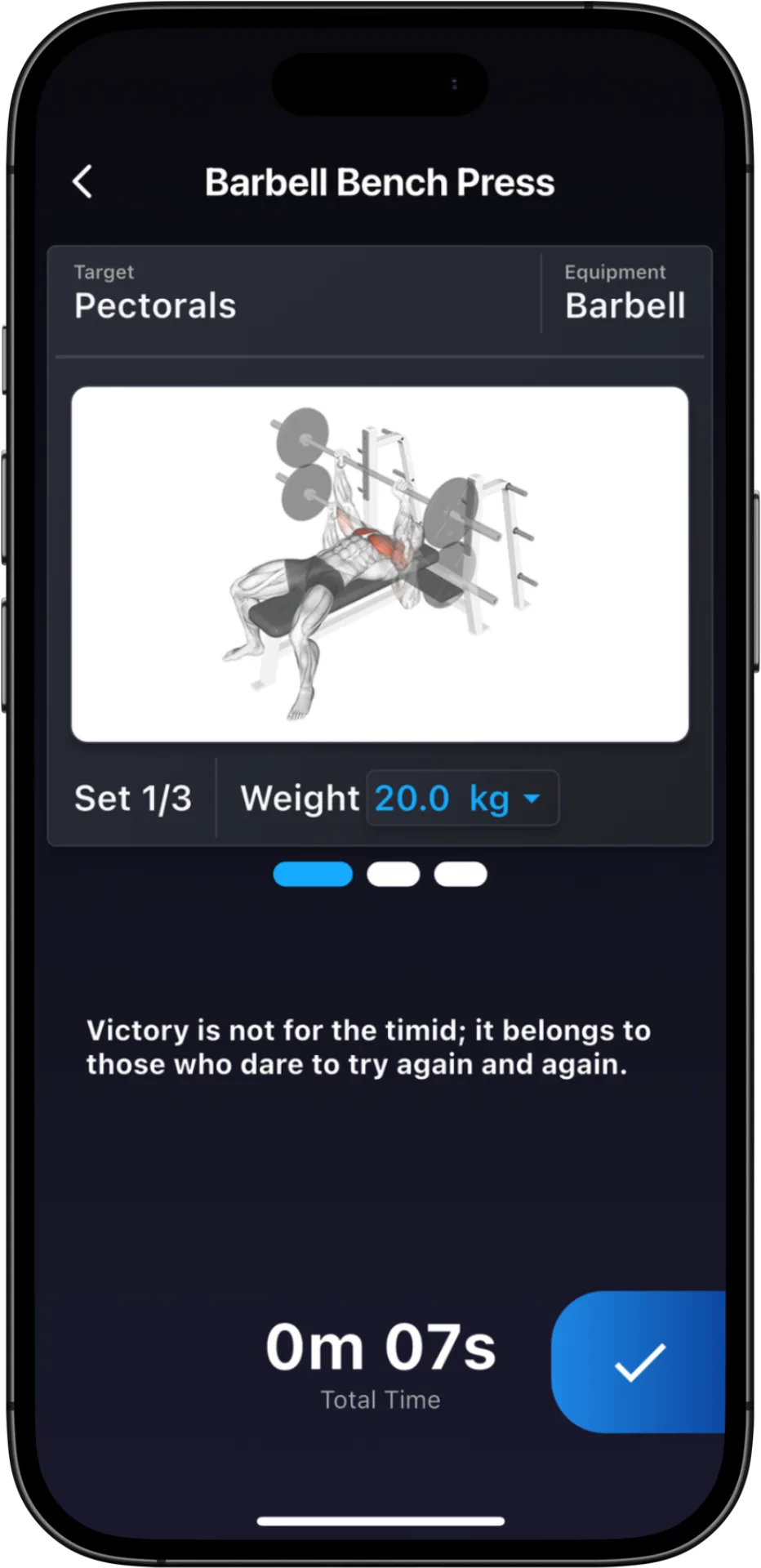
One of the biggest challenges of home workouts is knowing if your squat depth is sufficient or if your back is rounding during a row. This is where modern technology bridges the gap. Within the FitFlow app, you have access to over 1,000 guided exercises with high-definition video demonstrations. If you are unsure about the mechanics of a Bulgarian Split Squat, you can pull up the exercise detail screen to see exactly how to position your rear foot and maintain an upright torso.
- Control the Eccentric: Always lower the weight slowly (2-3 seconds). This is where the most muscle damage occurs, leading to better growth.
- Full Range of Motion: Avoid 'ego lifting' with partial reps. Go through the full stretch and contraction to recruit the maximum number of motor units.
- Neutral Spine: Whether you are rowing or squatting, keep your head in line with your spine to protect your neck and lower back.
By leveraging FitFlow’s intelligent form guidance, you can treat your smartphone as a digital personal trainer, ensuring that every rep you perform is contributing toward your goals rather than an appointment with a physical therapist.
The Workout Plan - Part 1: Lower Body and Core
The foundation of any full-body routine is the lower body. These are the largest muscle groups in your body, and training them elicits the greatest hormonal response. For this workout, we will focus on compound movements that maximize caloric burn and functional strength.
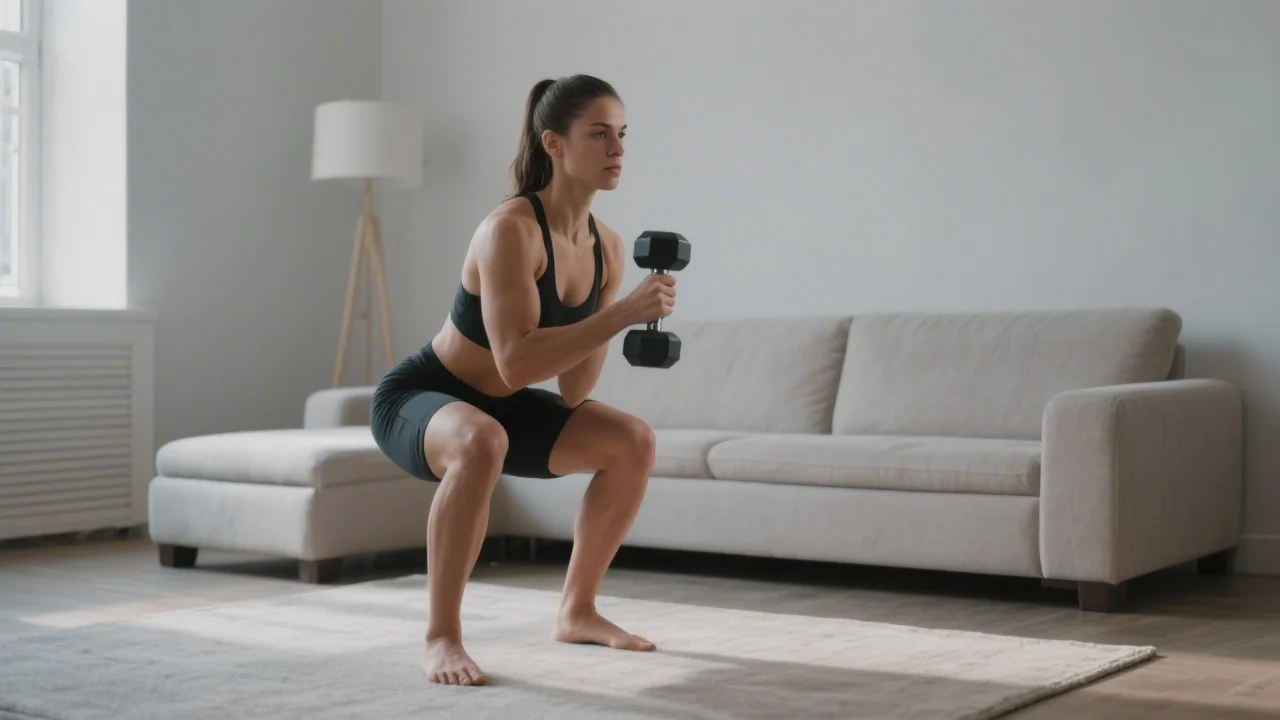
1. Goblet Squats (Target: Quads, Glutes, Core)
Hold a single dumbbell vertically against your chest, cupping the top head with both hands. Keep your elbows tucked in. Stand with feet slightly wider than shoulder-width. Lower your hips back and down, keeping your chest up, until your thighs are at least parallel to the floor. Drive through your heels to return to the start.
2. Dumbbell Romanian Deadlifts (Target: Hamstrings, Lower Back)
Hold a dumbbell in each hand in front of your thighs. With a slight bend in your knees, hinge at the hips, pushing your glutes back as you lower the weights along your shins. Feel the stretch in your hamstrings. Once you reach mid-shin level, squeeze your glutes to stand back up. Pro Tip: Do not let the weights drift away from your body; keep them close to maintain a neutral spine.
3. Weighted Plank with Dumbbell Drag (Target: Transverse Abdominis, Obliques)
Get into a high plank position with a dumbbell placed just behind your right wrist. Reach across with your left hand, grab the dumbbell, and drag it across the floor to the left side. Switch hands and repeat. This move forces your core to stabilize against the shifting weight, building incredible midsection stability.
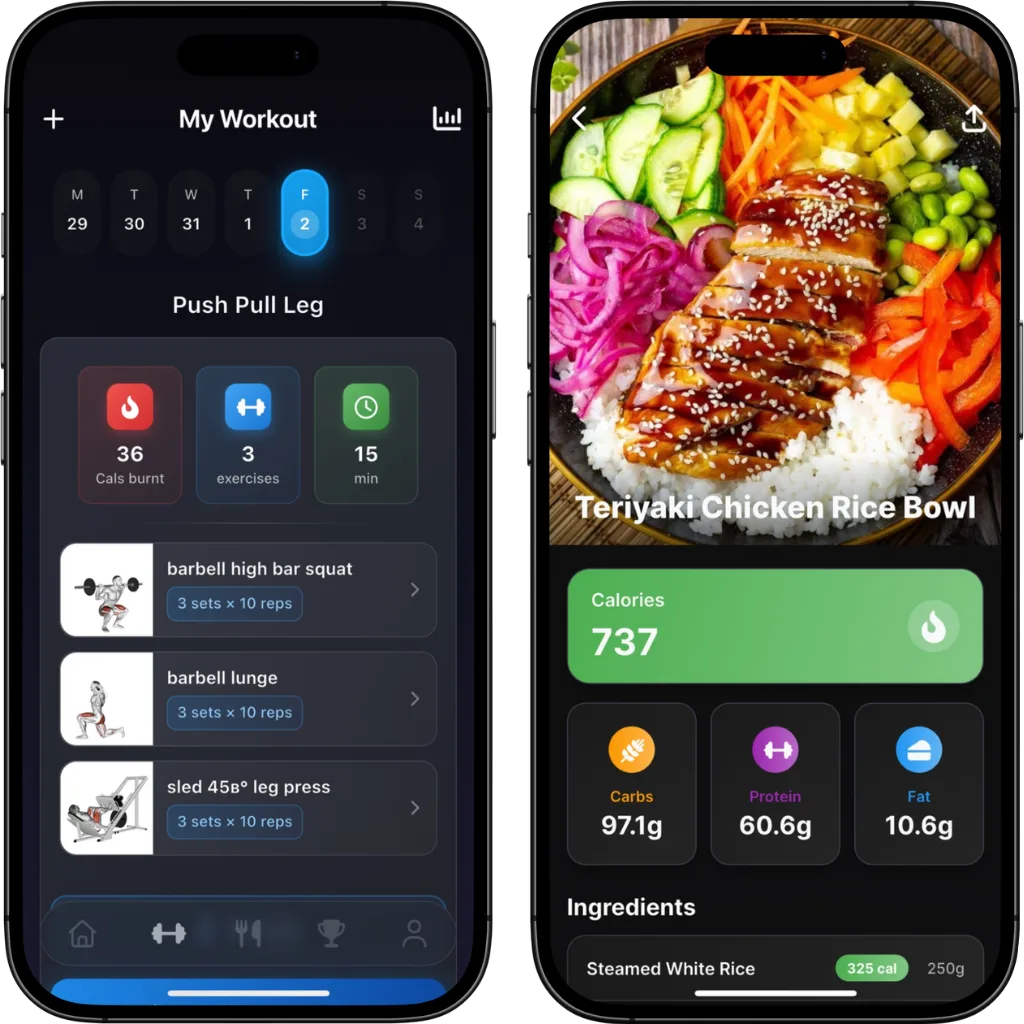
To keep your rest periods tight and your heart rate elevated, use the FitFlow workout session screen. It features a built-in rest timer that pings you when it's time for your next set, ensuring your workout remains high-intensity and time-efficient.
The Workout Plan - Part 2: Upper Body Push and Pull
A balanced physique requires equal attention to the front (pushing muscles) and the back (pulling muscles). Training these together in a full-body session creates a powerful metabolic effect and ensures you develop a V-taper frame while maintaining shoulder health.
1. Dumbbell Floor Press (Target: Chest, Triceps)
If you don't have a bench, the floor press is an excellent alternative. Lie on your back with knees bent and feet flat. Hold dumbbells above your chest with arms straight. Lower them until your upper arms touch the floor, pause for a split second to negate momentum, and press back up. This variation is actually safer for the shoulders as the floor prevents the elbows from traveling too far back.
2. Single-Arm Dumbbell Row (Target: Lats, Rhomboids, Biceps)
Place one hand on a sturdy chair or couch for support. With the other hand, pull a dumbbell toward your hip, focusing on driving your elbow toward the ceiling. This unilateral (one-sided) movement is fantastic for fixing strength imbalances. To ensure you're tracking your progress correctly, FitFlow’s AI workout scanning can automatically detect your movements and log the reps for you, allowing you to focus entirely on the squeeze of the muscle.
3. Dumbbell Overhead Press (Target: Shoulders, Triceps)
Stand with feet shoulder-width apart. Hold the dumbbells at shoulder height with palms facing each other (neutral grip) or facing forward. Press the weights directly overhead until your arms are locked out, then lower them under control. Engaging your glutes during this lift will provide a stable base and protect your lower back.
"Upper body compound movements are the 'bread and butter' of strength training. By focusing on multi-joint exercises, you get the most 'bang for your buck' in terms of muscle fiber recruitment."
Progressive Overload: How to Grow When You Can't Add Weight
The most common concern with home workouts is: "What happens when the dumbbells feel light?" In a gym, you simply grab the next pair. At home, you have to be more creative. Progressive overload is simply the act of making the workout harder over time, and weight is only one variable.
Methods to Increase Intensity
- Increase the Repetitions: If you did 10 reps last week, aim for 12 this week.
- Decrease Rest Intervals: Shorten your rest from 60 seconds to 45 seconds to increase metabolic demand.
- Improve Tempo: Slow down the eccentric (lowering) phase to 4 or 5 seconds to increase 'Time Under Tension.'
- Add Pause Reps: Hold the contraction at the most difficult part of the movement for 2 seconds.
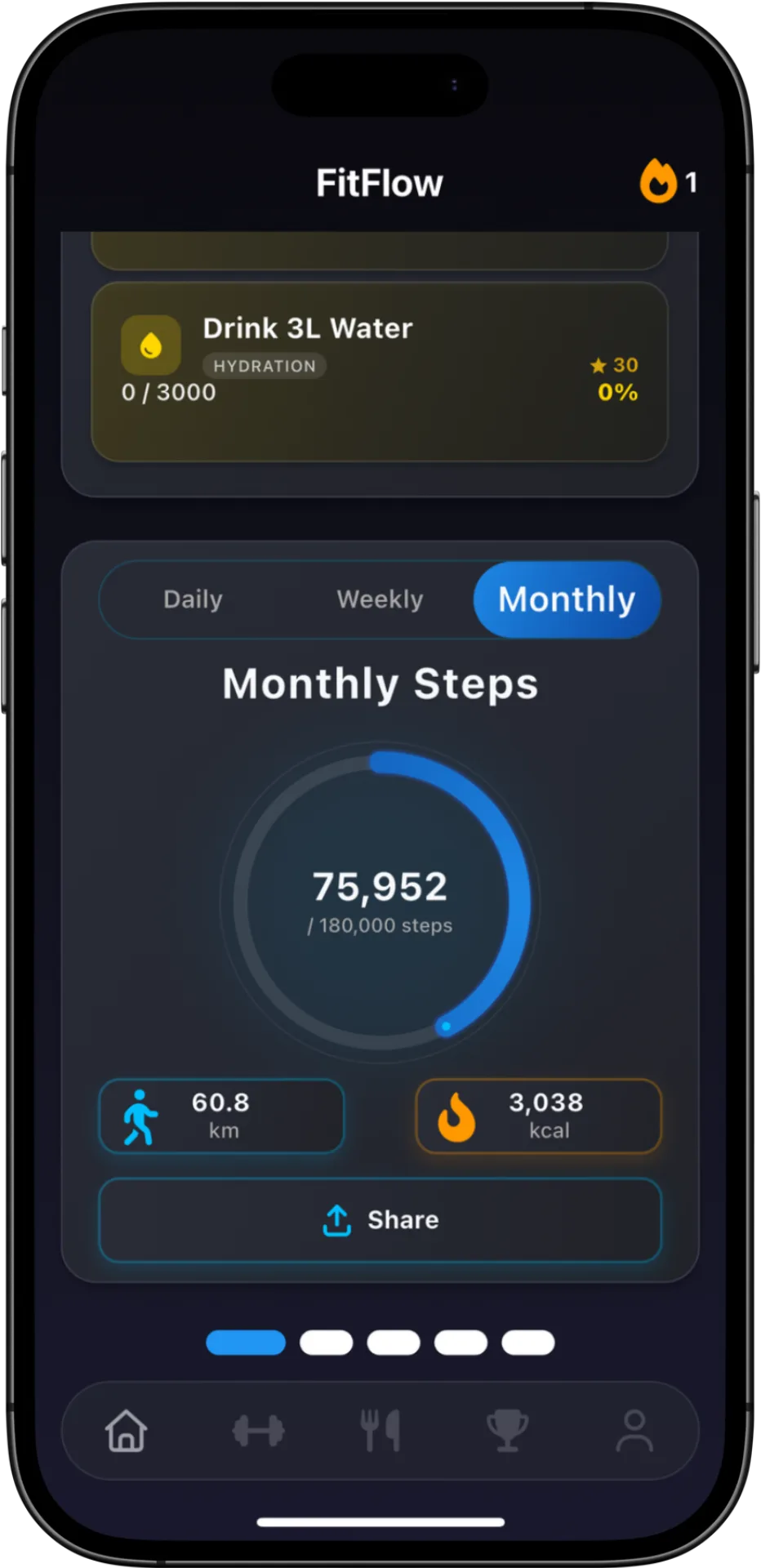
Tracking these nuances is where most people fail. This is why FitFlow’s Progress Analytics are vital. The app provides detailed fitness and nutrition analytics with progress charts, allowing you to see your strength trends over weeks and months. When you see a visual representation of your 'Personal Records' and achievement badges, it provides the psychological boost needed to push through a tough session. You can even see how you stack up against the community on the FitFlow Leaderboard, turning your home workout into a competitive sport.

Fueling the Machine: Nutrition for Home-Based Athletes
You can have the most perfect workout plan in the world, but if your nutrition is lacking, your body will not have the building blocks it needs to repair and grow muscle tissue. For those training at home, it is often easier to fall into the trap of mindless snacking. Precision is key.
The Macro Breakdown
To build muscle, you generally need a slight caloric surplus and sufficient protein—typically 0.7 to 1 gram of protein per pound of body weight. Protein provides the amino acids necessary for muscle protein synthesis, while carbohydrates fuel your high-intensity sets.
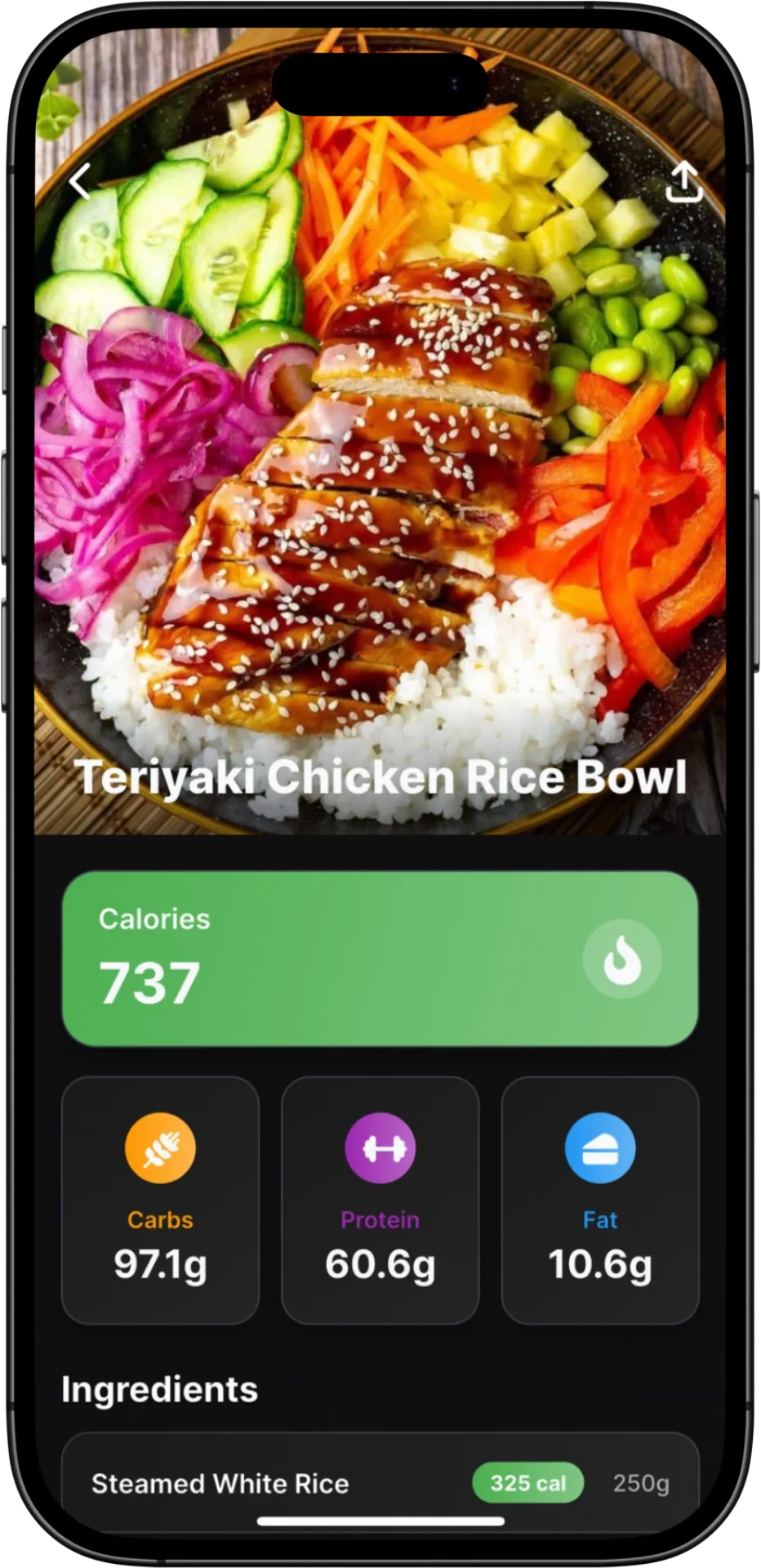
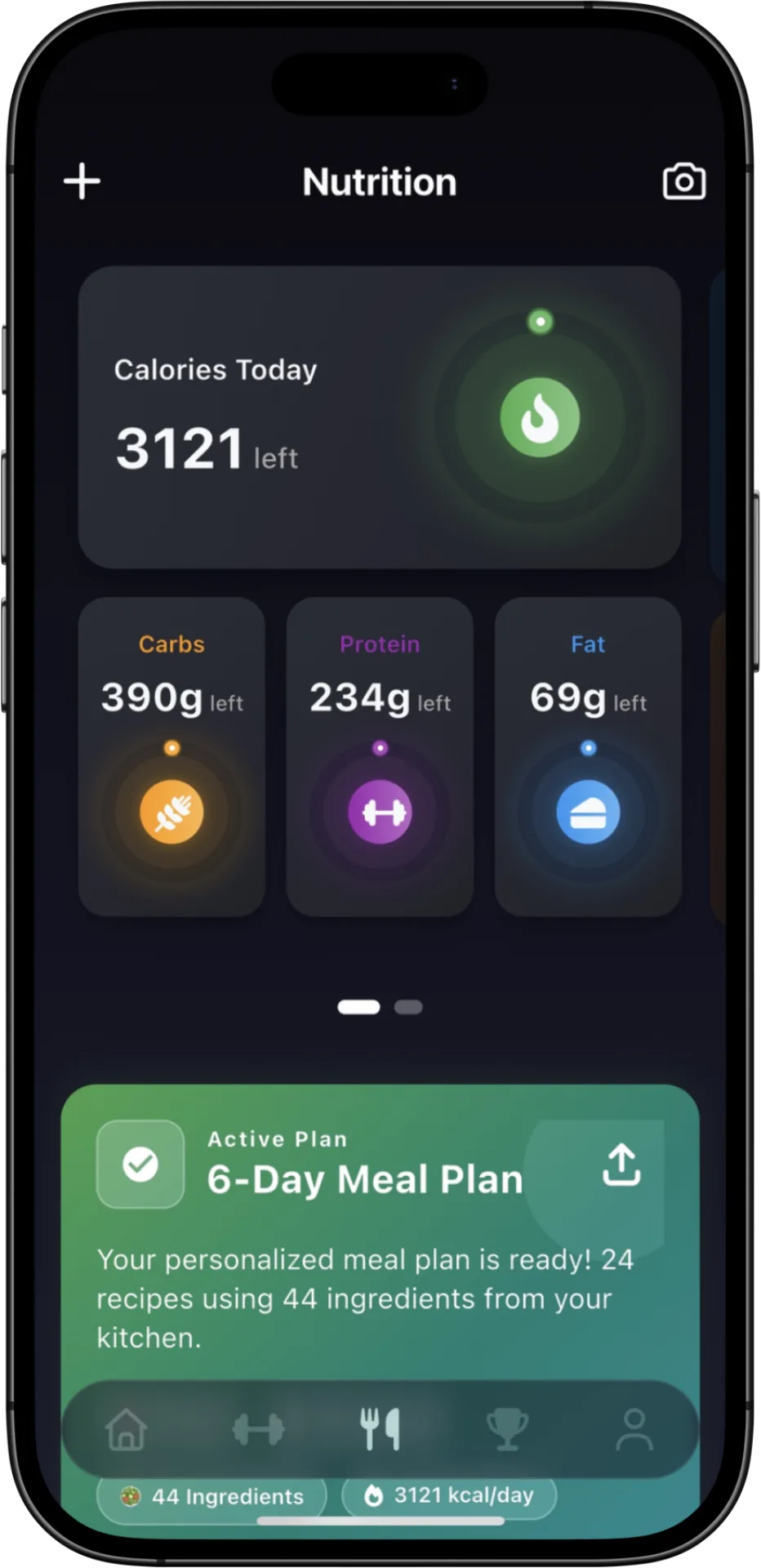
Logging food manually is the number one reason people quit their nutrition plans. FitFlow’s AI Food Scanning solves this by allowing you to simply snap a photo of your meal. The AI recognizes over 2 million foods and provides an instant breakdown of calories, protein, carbs, and fats. Whether you’re eating a homemade chicken stir-fry or a quick meal from a major restaurant chain, FitFlow’s database of 14 million items ensures 95%+ accuracy. This automation makes food logging up to 5x faster, meaning you can spend more time training and less time typing.
- Pre-Workout: Focus on fast-digesting carbs (like a banana) 30-60 minutes before training.
- Post-Workout: Prioritize high-quality protein and complex carbs to kickstart recovery.
- Hydration: Even 2% dehydration can significantly decrease strength output. Use the FitFlow Water Tracker to ensure you're hitting your daily targets.
Recovery, Consistency, and Long-Term Success
Muscle isn't built in the living room; it's built while you sleep. The workout is simply the stimulus; the growth happens during rest. Aim for 7-9 hours of quality sleep per night to allow your growth hormone levels to peak and your central nervous system to recover.
The Power of Community and Motivation
Training alone at home can sometimes feel isolating. Without the energy of a crowded gym, your motivation might wane on a rainy Tuesday afternoon. This is why the 'social' aspect of fitness is so important. FitFlow integrates daily motivational quotes and progress reminders to keep your head in the game. The app’s achievement system, complete with celebration animations, turns every milestone into a victory.
Furthermore, the Apple Health sync ensures that all your data—from your morning steps to your evening dumbbell session—is consolidated in one place. This holistic view of your health makes it easier to stay committed. Remember, a 'perfect' workout done once is useless, but a 'good' workout done consistently for six months is life-changing.
Final Thoughts
A pair of dumbbells and a smartphone are all you need to build a world-class physique. By combining the fundamental principles of resistance training with the cutting-edge technology of FitFlow, you remove the barriers of time, space, and confusion. Start today, log your first set, and watch as the small, daily wins accumulate into a total body transformation.

Sources & References
- What are the potential mechanisms of fatigue-induced skeletal muscle hypertrophy with low-load resistance exercise training? — Flewwelling LD, Hannaian SJ, Cao V (2025)
- Resistance-training exercises with different stability requirements: time course of task specificity — Saeterbakken AH, Andersen V, Behm DG (2016)

FitFlow Editorial Team
Fitness & Nutrition Editorial TeamCertified personal trainers & nutrition coaches
The FitFlow Editorial Team is a group of certified personal trainers, nutrition coaches, and fitness writers who translate exercise science and nutrition research into practical, actionable guidance. Every article is grounded in peer-reviewed sources and reviewed for accuracy before publishing.
Frequently Asked Questions
Who is this guide for?
This guide is for anyone focused on fitness tips and looking for practical, sustainable progress.
How quickly can I apply these recommendations?
Most recommendations are designed for immediate implementation. Start with one change today, then layer improvements weekly.
How does FitFlow support this strategy?
FitFlow supports execution with AI-powered meal tracking, workout planning, and progress analytics that help you stay consistent.