The Ultimate Fitness Checklist for Competitive Powerlifters (2026)
The complete fitness checklist for Competitive Powerlifters. Everything you need to set up, track, and optimise your training and nutrition — all in one place.
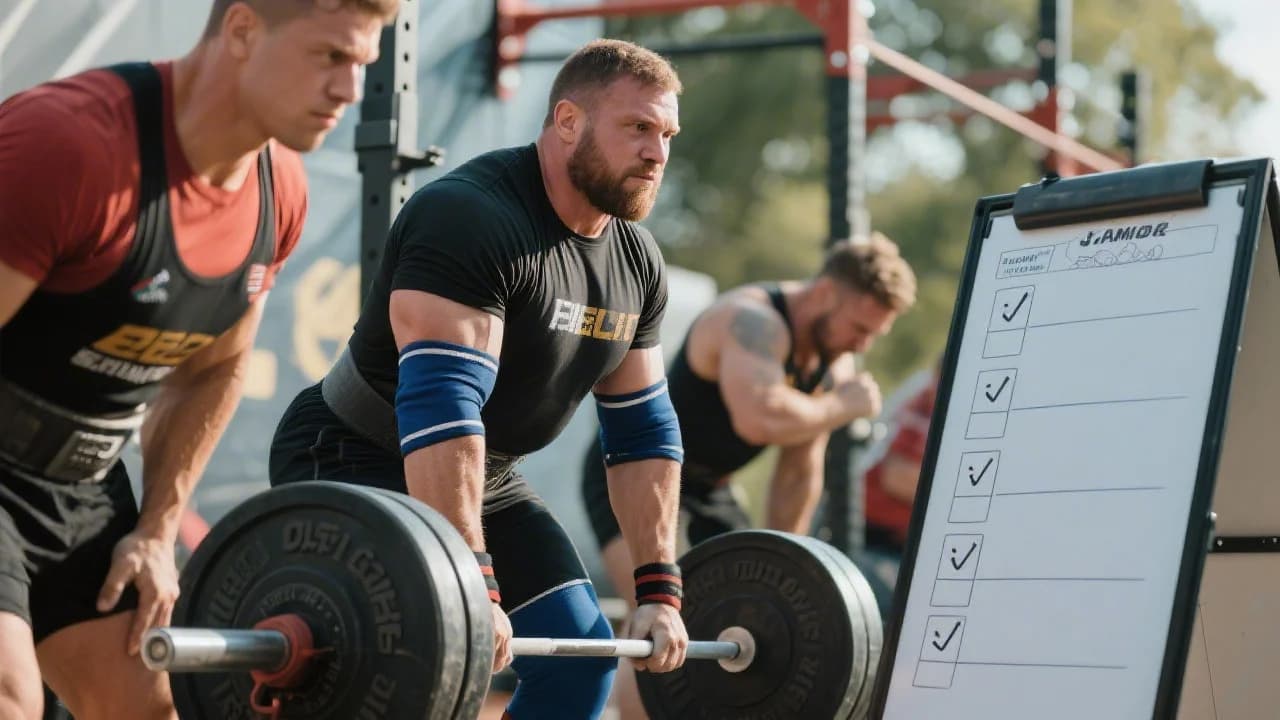
As a competitive powerlifter, you're not just lifting weights; you're meticulously crafting strength, managing body composition, and strategically peaking for meet day. The stakes are high: a missed rep, a miscalculated macro, or an overlooked recovery session can mean the difference between a new PR and a frustrating plateau. Many powerlifters struggle with hitting training plateaus on the big three lifts, cutting to weight class without losing strength, and managing the high calorie intake across complex meal plans. Without a structured approach, it's easy to get lost in the details, leading to suboptimal performance or even injury. In fact, a study published in the Journal of Strength and Conditioning Research found that periodized training programs lead to significantly greater strength gains compared to non-periodized approaches, highlighting the need for structured planning. This checklist is your roadmap to success, addressing these common gaps by providing a clear, actionable framework for every aspect of your preparation. It’s designed to help you track RPE and progressive overload across mesocycles, optimize your body composition within your weight class, and ensure you're always ready to perform when it matters most.
Why This Matters for Competitive Powerlifters
For competitive powerlifters, consistency and structure aren't just beneficial; they're non-negotiable. Missing key steps in your programming, nutrition, or recovery can lead to stalled progress, failed weight cuts, or even debilitating injuries, derailing months of hard work. Imagine hitting a squat plateau right before your peaking block because you neglected proper deloading, or missing weight class because your macro tracking was inconsistent. These setbacks cost you not just physical gains but also mental resilience and competition opportunities. A structured checklist ensures you systematically address every variable critical to your success. By actively tracking your progress using FitFlow’s Smart Workout Tracking for barbell lifts, personal record tracking, and macro calculator for weight-class cuts, you reinforce these essential habits. FitFlow's visual charts for strength trends provide objective feedback, helping you make data-driven adjustments and maintain unwavering consistency, ultimately ensuring you're always on track to set new competition PRs.
Unlock your true potential on the platform with this ultimate fitness checklist for competitive powerlifters. Designed to help you smash PRs, manage weight cuts, and peak flawlessly for your next meet, this guide covers every crucial aspect of your training and nutrition.
Training & Programming
Random training leads to plateaus; periodization ensures progressive overload and proper peaking for competition.
RPE helps auto-regulate training intensity, crucial for managing fatigue and adapting to daily readiness, especially in peaking blocks. FitFlow's Smart Workout Tracking allows RPE input.
Precise data tracking is fundamental for progressive overload, identifying plateaus, and planning future mesocycles. FitFlow offers dedicated barbell workout tracking.
Accessory work supports the main lifts and addresses weaknesses; tracking ensures balanced development and prevents imbalances.
Deloads are vital for recovery, preventing overtraining, and allowing the body to adapt to heavy loading, reducing injury risk.
Tracking personal records motivates and provides clear targets for future training cycles. FitFlow's PR tracking makes this easy.
Visual feedback helps identify technical flaws that could lead to injury or limit strength potential.
Nutrition & Weight Management
Precise macro tracking is critical for strength maintenance during cuts, optimal recovery, and body composition within your weight class. FitFlow's macro calculator is invaluable here.
Calorie control is paramount for making weight class without sacrificing strength. FitFlow's AI Food Scanning and barcode scanning simplify this.
High protein intake is essential for muscle repair, growth, and strength preservation during calorie deficits.
Hydration impacts performance, recovery, and overall health, especially during heavy training and pre-meet water manipulation.
Meal prepping ensures you hit macro targets consistently, particularly during bulking phases or precise weight cuts.
Consistent weight tracking helps predict and manage weight class fluctuations, crucial for a smooth pre-meet cut. FitFlow's progress analytics track weight.
Optimizing nutrient timing can enhance recovery, fuel performance, and support muscle protein synthesis.
Recovery & Injury Prevention
Sleep is the cornerstone of recovery, hormone regulation, and strength adaptation, especially under heavy training loads.
Proper warm-ups prepare the body for heavy lifts, while cool-downs aid recovery and flexibility, reducing injury risk.
Addressing mobility restrictions can improve lifting mechanics, prevent injuries, and enhance overall movement quality.
Ignoring pain can lead to serious injuries; intelligent adjustments prevent setbacks and ensure long-term progress.
Active recovery can improve blood flow, reduce muscle soreness, and aid overall recuperation without adding stress.
Proactive bodywork can address minor issues before they become major injuries, crucial for managing heavy loading.
Meet Day Preparation
Peaking ensures you are rested, strong, and ready to hit maximum lifts on competition day, not burnt out.
Rehearsing meet day conditions reduces anxiety and ensures smooth execution of your first lifts.
A well-planned weight cut ensures you make weight without compromising strength or energy levels. FitFlow's macro calculator aids this.
Being prepared prevents last-minute stress and ensures you have everything you need to perform.
Rapid and effective rehydration/refueling is critical to restore glycogen and fluid levels before lifting.
Mental preparation is as important as physical; positive visualization can enhance performance.
Mindset & Lifestyle
Clear goals provide direction and motivation, helping you stay focused through challenging training blocks. FitFlow's PR tracking helps here.
Accountability, feedback, and camaraderie are invaluable for staying motivated and overcoming plateaus.
High stress negatively impacts recovery, sleep, and overall performance, making it harder to adapt to heavy loads.
Acknowledging progress builds confidence, while analyzing failures provides crucial lessons for future improvement. FitFlow's achievements feature can help.
Analyzing past data helps identify what works, what doesn't, and informs future programming decisions. FitFlow's progress analytics are perfect for this.
Frequently Asked Questions
Track Your Progress with FitFlow
Join 50,000+ users — including thousands of Competitive Powerlifters — hitting their goals faster with AI-powered tracking.
Download FitFlow Free