Mastering Weight Loss: Your Guide to TDEE and Calorie Deficits
Reviewed by the fitness & nutrition editorial team · Certified personal trainers & nutrition coaches

Understanding Your Total Daily Energy Expenditure (TDEE)
Embarking on a weight loss journey can often feel overwhelming, with countless diets, fads, and conflicting advice. However, at its core, sustainable weight loss boils down to a fundamental principle: energy balance. To lose weight, you must consistently consume fewer calories than your body burns. This might sound simple, but understanding exactly how many calories your body burns daily – your Total Daily Energy Expenditure (TDEE) – is the critical first step to success.
Your TDEE represents the total number of calories your body expends in a 24-hour period, accounting for everything from basic bodily functions to intense workouts and even the digestion of your food. It's a dynamic number that fluctuates based on numerous factors, including your age, sex, weight, height, body composition, and activity level. Without an accurate understanding of your TDEE, setting an effective calorie deficit becomes a game of guesswork, often leading to frustration, plateaus, or even unhealthy practices.
Think of your body as a sophisticated engine. Just like an engine needs fuel to run, your body needs calories. If you put in less fuel than the engine uses, it will start to draw on its reserves – in this case, stored body fat. Conversely, if you consistently provide more fuel than needed, your body will store the excess, typically as fat.
The Golden Rule of Weight Loss: To lose weight, you must create a consistent calorie deficit, meaning you consume fewer calories than your TDEE.
By learning how to calculate your TDEE, you gain a powerful tool: a personalized calorie target that serves as the foundation for your weight loss strategy. It moves you away from generic diet plans and towards a tailored approach that respects your unique physiology and lifestyle. This knowledge empowers you to make informed decisions about your nutrition, ensuring your efforts are both effective and sustainable.

Deconstructing TDEE: The Four Pillars of Energy Burn
To truly understand your TDEE, it’s essential to break it down into its primary components. Your body burns energy in several distinct ways, each contributing to your overall daily caloric expenditure. These four main components are:
Basal Metabolic Rate (BMR)
Your BMR is the largest component of your TDEE, often accounting for 60-75% of your total daily calorie burn. It represents the number of calories your body needs to perform fundamental life-sustaining functions while at rest. This includes processes like breathing, blood circulation, cell production, nutrient processing, and maintaining body temperature. Essentially, it's the energy your body burns just to keep you alive, even if you were to spend the entire day in bed.
Non-Exercise Activity Thermogenesis (NEAT)
NEAT refers to the calories burned through all non-exercise physical activity. This is where the subtle movements of your day add up. Think about fidgeting, standing, walking to the kitchen, taking the stairs, gardening, cleaning, or even just shifting in your seat. NEAT can vary significantly from person to person, often accounting for 15-30% of your TDEE, and it’s a powerful, often underestimated, tool for increasing calorie expenditure without formal exercise.
Thermic Effect of Food (TEF)
Also known as diet-induced thermogenesis, TEF is the energy your body uses to digest, absorb, and metabolize the food you eat. It's the 'cost' of processing your meals. Different macronutrients have different TEF values: protein requires the most energy to digest (20-30% of its caloric content), followed by carbohydrates (5-10%), and fats (0-3%). On average, TEF accounts for about 10% of your TDEE.
Exercise Activity Thermogenesis (EAT)
EAT encompasses the calories burned during structured, intentional physical activity, such as hitting the gym, going for a run, cycling, swimming, or participating in a sports game. This is the most variable component of TDEE, as it depends entirely on the duration, intensity, and type of exercise you perform. For someone sedentary, EAT might be negligible, while for an elite athlete, it could be a substantial portion of their daily calorie burn.
Understanding these components helps you appreciate the various ways your body expends energy and highlights areas where you can potentially influence your TDEE. For instance, increasing your NEAT by taking more steps or choosing to stand more often can contribute significantly to your overall calorie burn, complementing your formal exercise efforts.

Pinpointing Your Basal Metabolic Rate (BMR)
Since BMR is the largest and most foundational component of your TDEE, accurately estimating it is crucial. While laboratory tests can measure BMR precisely, several widely accepted formulas provide excellent estimations. The most common and generally accurate formula used for BMR calculation is the Mifflin-St Jeor equation:
Mifflin-St Jeor Equation:
- For Men: BMR = (10 × weight in kg) + (6.25 × height in cm) - (5 × age in years) + 5
- For Women: BMR = (10 × weight in kg) + (6.25 × height in cm) - (5 × age in years) - 161
Let's break down how to use this:
- Convert your weight: If you use pounds, divide by 2.2 to get kilograms (e.g., 180 lbs / 2.2 = 81.8 kg).
- Convert your height: If you use inches, multiply by 2.54 to get centimeters (e.g., 68 inches * 2.54 = 172.7 cm).
- Plug in your numbers: Insert your calculated weight, height, and your age into the appropriate formula for your sex.
Example Calculation (for a 30-year-old woman, 5'6" (167.6 cm), 140 lbs (63.5 kg)):
BMR = (10 × 63.5) + (6.25 × 167.6) - (5 × 30) - 161
BMR = 635 + 1047.5 - 150 - 161
BMR = 1371.5 calories
This means this individual burns approximately 1371.5 calories per day just to keep her body functioning at rest.
While the Mifflin-St Jeor equation is highly regarded, other formulas like the Harris-Benedict equation also exist and provide similar estimations. However, the Mifflin-St Jeor is generally considered more accurate for a wider population. Keep in mind that these are estimations. Factors like body composition (muscle mass burns more calories at rest than fat mass) can influence your actual BMR, making these formulas a good starting point rather than an absolute truth.
For those looking for a quick and convenient way to estimate their BMR without manual calculations, many online calculators can do the work for you. Just ensure you're using a reputable source that employs one of these established formulas.

From BMR to TDEE: Incorporating Your Activity Level
Once you have your BMR, the next step to calculating your TDEE is to factor in your daily activity level. This is where the EAT and NEAT components come into play. To do this, we multiply your BMR by an 'activity factor' that corresponds to how active you are on a typical day.
Here are the commonly used activity factors:
- Sedentary (little to no exercise, desk job): BMR × 1.2
- Lightly Active (light exercise/sports 1-3 days/week): BMR × 1.375
- Moderately Active (moderate exercise/sports 3-5 days/week): BMR × 1.55
- Very Active (hard exercise/sports 6-7 days/week): BMR × 1.725
- Extremely Active (very hard exercise/physical job or training twice a day): BMR × 1.9
Choosing the right activity factor requires honest self-assessment. It’s easy to overestimate your activity level, which can lead to an inflated TDEE and a smaller-than-intended calorie deficit. Be realistic about your exercise frequency and intensity, and remember to account for your non-exercise movement throughout the day.
Let's continue our example: The 30-year-old woman with a BMR of 1371.5 calories. Let's say she works an office job but goes to the gym 3 times a week for moderate workouts. She would likely fall into the 'Moderately Active' category.
TDEE = BMR × Activity Factor
TDEE = 1371.5 × 1.55
TDEE = 2125.8 calories
So, this individual's estimated Total Daily Energy Expenditure is approximately 2126 calories. This is the number of calories she needs to consume daily to maintain her current weight.
It's important to recognize that this is still an estimation. Factors like metabolic adaptation, changes in body composition, and even variations in daily NEAT can cause your actual TDEE to differ slightly. However, this calculated TDEE provides an excellent starting point for designing your nutrition plan.
For those engaged in specific sports or very physically demanding jobs, an activity tracker that monitors heart rate and movement can provide a more personalized estimate of daily calorie burn, which can then be used to fine-tune your TDEE calculation. Remember, the goal is to get as close as possible to your true TDEE to make your calorie deficit effective.

Crafting Your Calorie Deficit for Sustainable Weight Loss
With your TDEE calculated, you now have the foundational number needed to create a calorie deficit. A calorie deficit is simply consuming fewer calories than your body burns, forcing your body to tap into its stored energy reserves (body fat) for fuel.
How Big Should Your Deficit Be?
For most individuals, a safe and sustainable rate of weight loss is typically 1-2 pounds per week. To achieve this, a calorie deficit of 500-750 calories per day is generally recommended. Since one pound of body fat is roughly equivalent to 3,500 calories, a 500-calorie daily deficit would theoretically lead to a loss of one pound per week (500 calories/day * 7 days/week = 3,500 calories/week).
- For 1 pound/week weight loss: TDEE - 500 calories
- For 1.5 pounds/week weight loss: TDEE - 750 calories
Using our example TDEE of 2126 calories:
To lose 1 pound per week: 2126 - 500 = 1626 calories/day
To lose 1.5 pounds per week: 2126 - 750 = 1376 calories/day
It's crucial not to create an overly aggressive deficit (e.g., more than 1000 calories below TDEE) unless under medical supervision. Extreme deficits can lead to nutrient deficiencies, muscle loss, metabolic slowdown, and make the diet unsustainable, often resulting in rebound weight gain. Aim for consistency and patience over rapid, drastic results.
The Role of Macronutrients in a Deficit
While total calories are king for weight loss, the composition of those calories (your macronutrients: protein, carbohydrates, and fats) plays a vital role in satiety, muscle preservation, and overall health:
- Protein: Prioritize protein intake. It's the most satiating macronutrient, helps preserve lean muscle mass during a calorie deficit, and has a higher thermic effect of food (TEF). Aim for 0.7-1 gram of protein per pound of body weight.
- Fats: Essential for hormone production and nutrient absorption. Don't cut fats too low; aim for 20-30% of your total daily calories from healthy fat sources.
- Carbohydrates: Provide energy for workouts and daily functions. Focus on complex carbohydrates (whole grains, fruits, vegetables) for fiber and sustained energy.
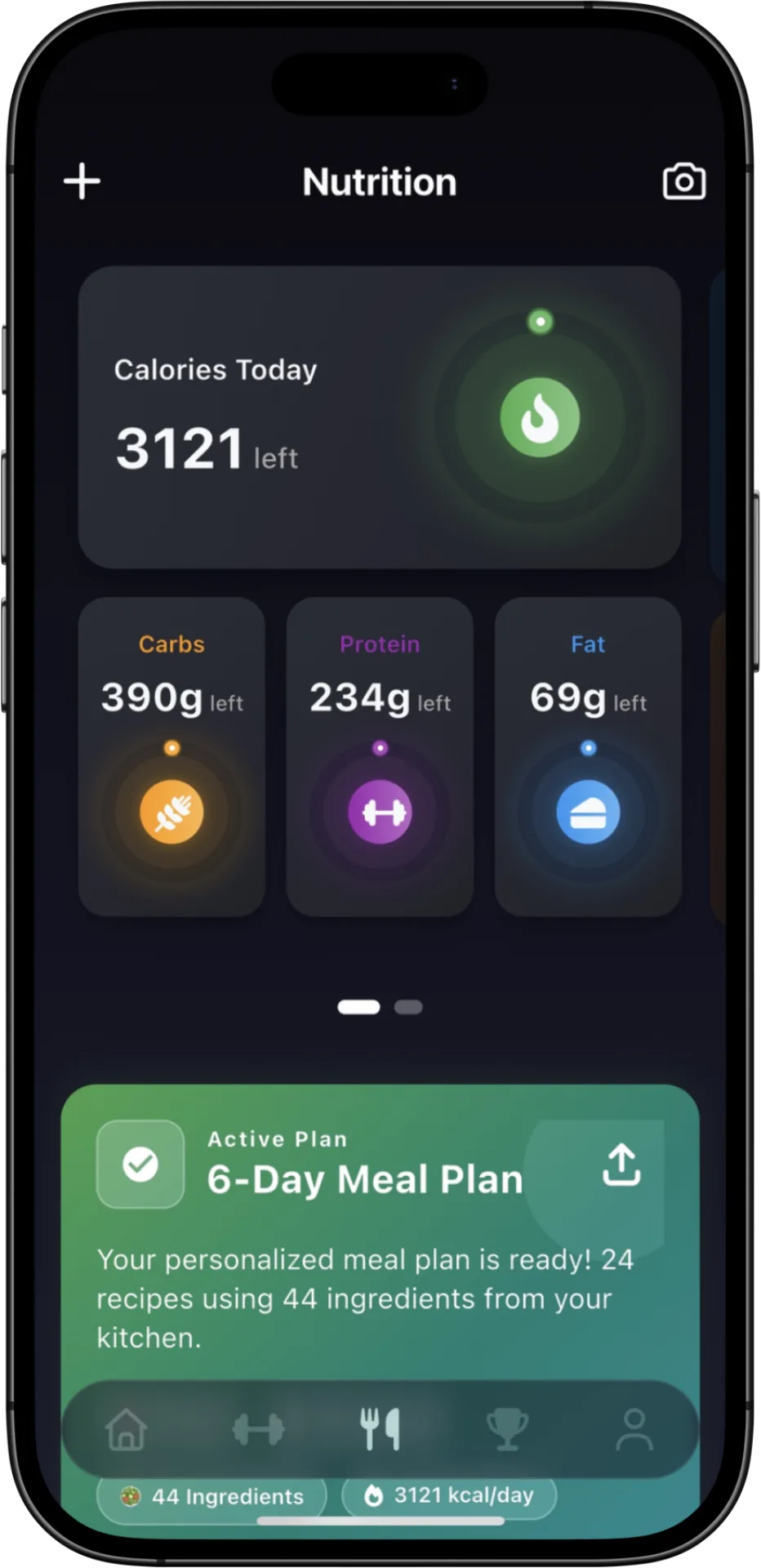
With FitFlow's AI Food Scanning & Nutrition Tracking, you can effortlessly snap a photo of your meal for instant calorie counting and macro breakdowns (protein, carbs, fats). Our database of 14M+ items, including official restaurant data, makes logging up to 5x faster than manual methods, automating 80% of your food logging. This precision ensures you stay within your calorie deficit while meeting your macro goals. FitFlow also offers custom meal plans tailored to weight loss and supports various dietary preferences, making it easy to build a sustainable and enjoyable eating strategy.
The Pitfalls and Progress: Monitoring and Adjusting Your Journey
Calculating your TDEE and setting a calorie deficit is an excellent starting point, but it's not a one-and-done task. Your body is dynamic, and your metabolic needs can change as you lose weight, build muscle, or alter your activity levels. Therefore, consistent monitoring and periodic adjustments are essential for long-term success.
Why Monitoring is Key:
- Plateaus: As you lose weight, your TDEE naturally decreases because there's less body mass to maintain. This is a common reason for weight loss plateaus. If your weight loss stalls for 2-3 weeks despite adherence, it's likely time to recalculate your TDEE based on your new weight and adjust your deficit accordingly.
- Individual Variability: Formulas are estimations. Your actual TDEE might be slightly higher or lower than calculated due to genetic factors, gut microbiome, or subtle differences in metabolic efficiency. Consistent tracking helps you identify your body's unique response.
- Motivation: Seeing tangible progress, even small victories, can be incredibly motivating and reinforce healthy habits.
Tools for Effective Monitoring:
- Weight and Body Fat Tracking: Regularly weigh yourself (e.g., 1-2 times per week at the same time, under the same conditions) and track body fat if possible. Focus on trends over daily fluctuations.
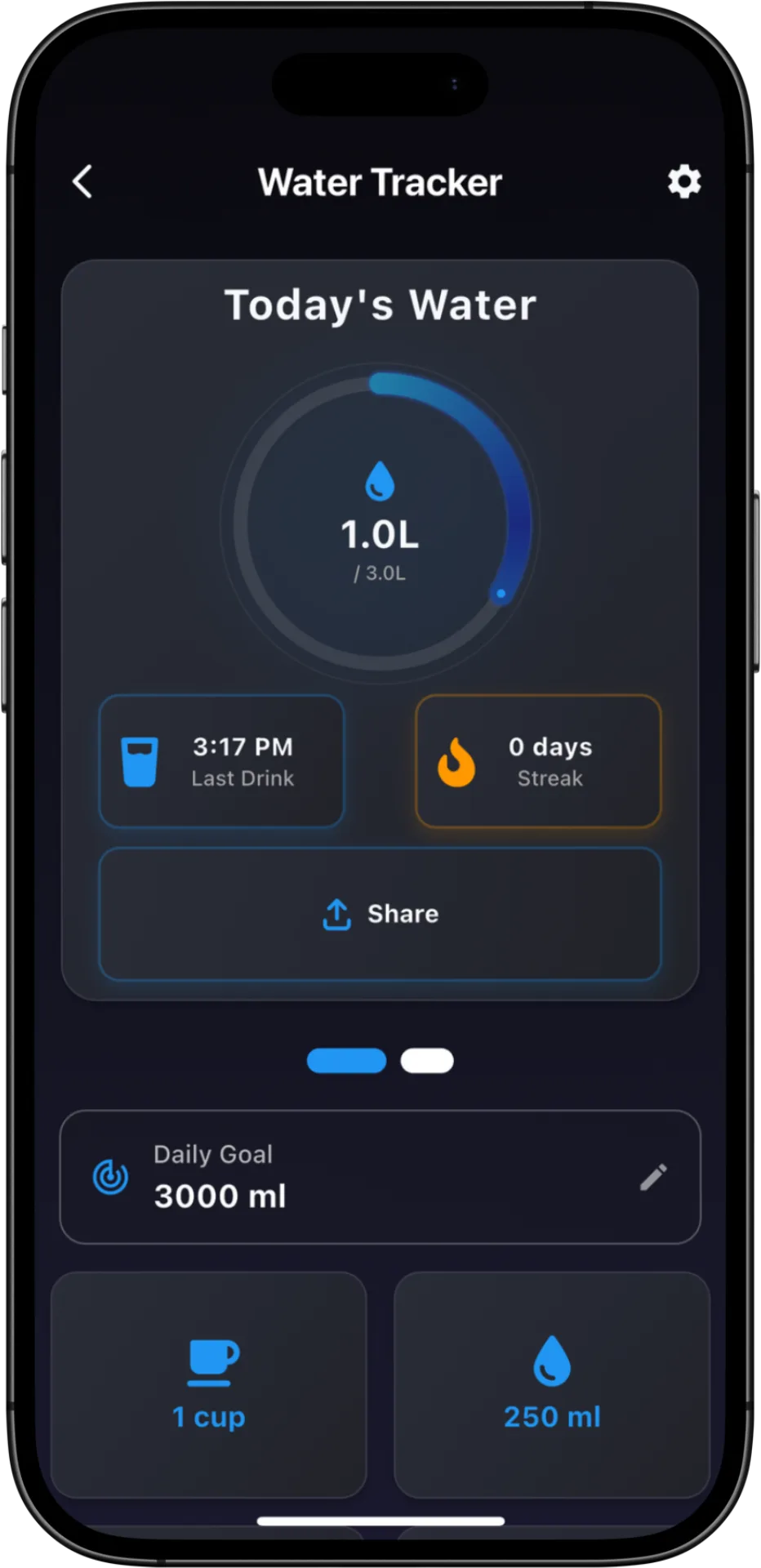
- Step and Water Intake Monitoring: These simple metrics reflect overall activity and hydration, both crucial for metabolic health and satiety.
- Workout Performance: Are your workouts getting easier? Are you lifting heavier or running further? Improved fitness is a strong indicator of progress beyond the scale.
- Non-Scale Victories: How do your clothes fit? Do you have more energy? Are you sleeping better? These subjective improvements are just as important as objective numbers.
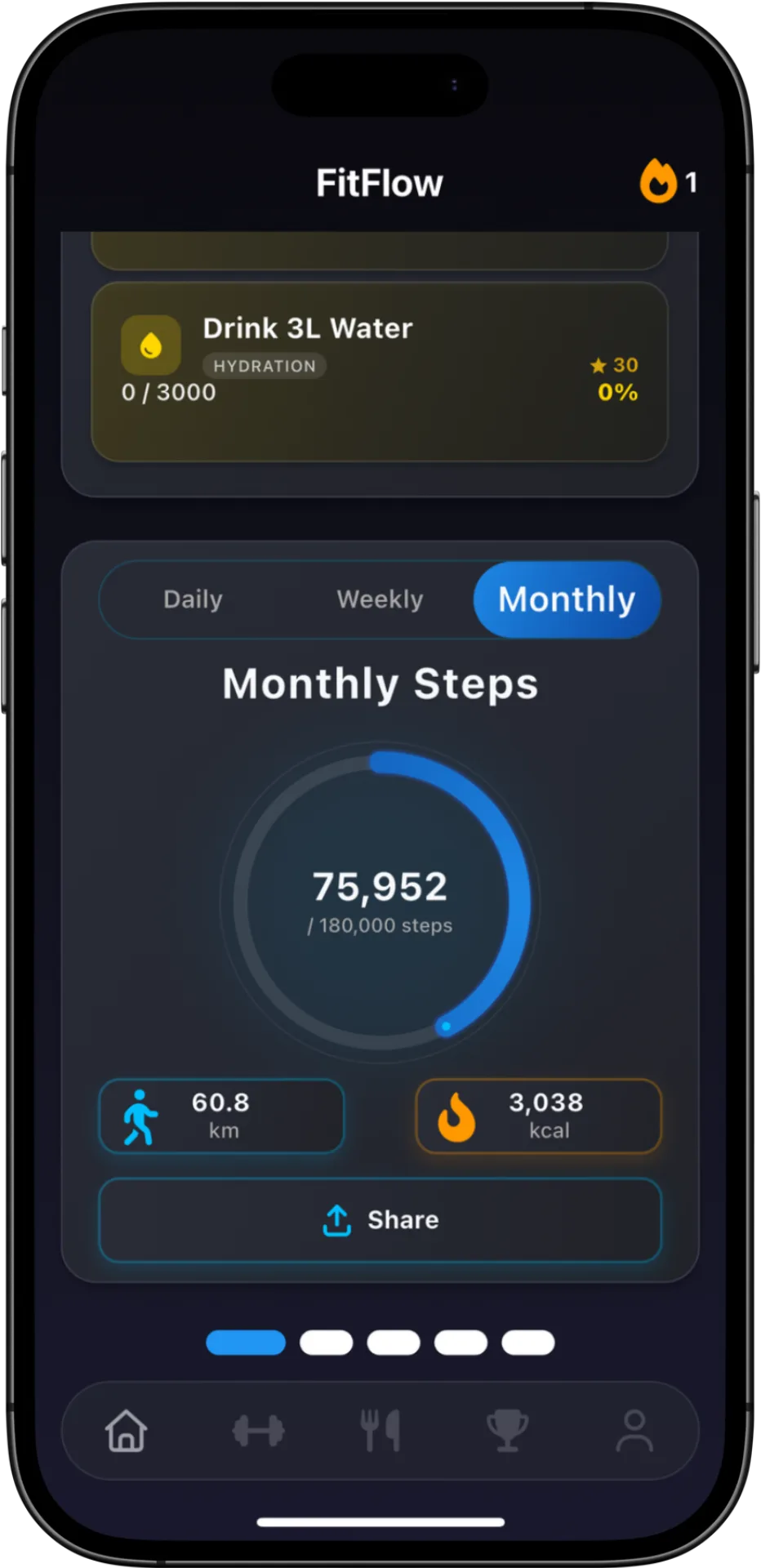
FitFlow's Progress Analytics & Goal Setting features are designed to make monitoring effortless and insightful. Our app allows you to track weight and body fat with visual charts, monitor step and water intake, and celebrate personal records and achievement badges. Detailed fitness and nutrition analytics provide clear progress charts, helping you identify trends and make informed adjustments. With smart goal-setting and milestone celebrations, FitFlow keeps you motivated and ensures your journey is always moving forward, even when the scale seems stuck.
FitFlow: Your AI-Powered Partner in Calorie Management
Manually calculating TDEE, tracking every calorie, and adjusting your plan can be time-consuming and prone to error. This is where FitFlow steps in, leveraging cutting-edge AI to automate and simplify your entire weight loss journey, ensuring precision and consistency without the hassle.
Effortless Nutrition Tracking:
- AI Food Scanning: Forget manual logging. Just snap a photo of your meal with FitFlow's camera, and our AI instantly provides calorie counts and macro breakdowns. Recognizing over 2 million foods, it makes tracking up to 5 times faster than traditional methods, automating 80% of your food logging.
- Barcode Scanning & Database: For packaged foods, simply scan the barcode for 95%+ accurate nutritional data from our database of 14 million items. We even partner with major restaurant chains for official nutritional information.
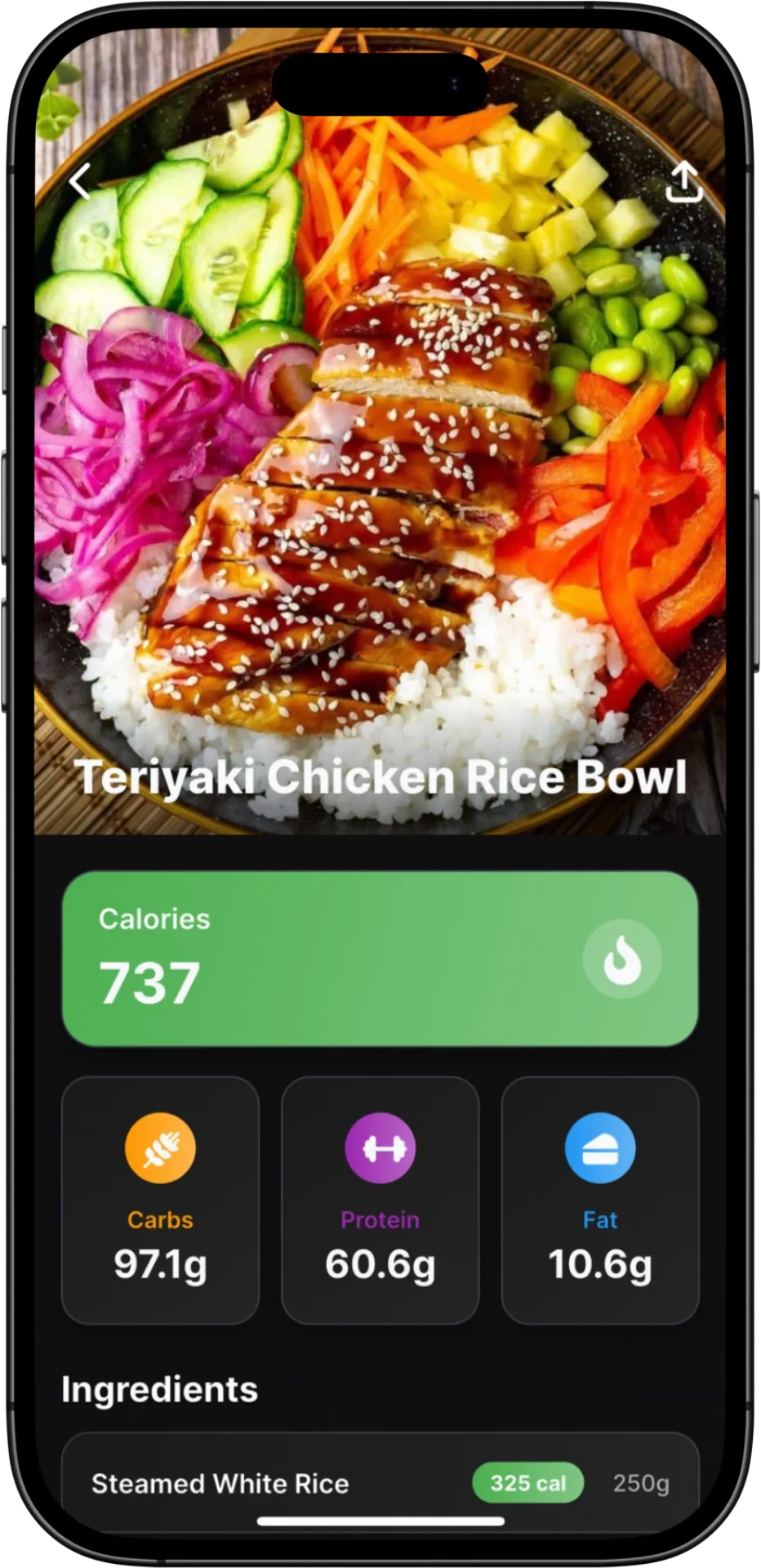
- Custom Meal Plans: Based on your TDEE, deficit goals, and dietary preferences (vegetarian, vegan, keto, paleo, gluten-free), FitFlow generates personalized meal plans. Our recipe builder even lets you create homemade meals with full nutritional breakdowns, marking allergens and restrictions.
- Quick-Add & Favorites: For repeated meals, use quick-add with auto-fill or save your favorites for lightning-fast logging.
Smart Workout Tracking:
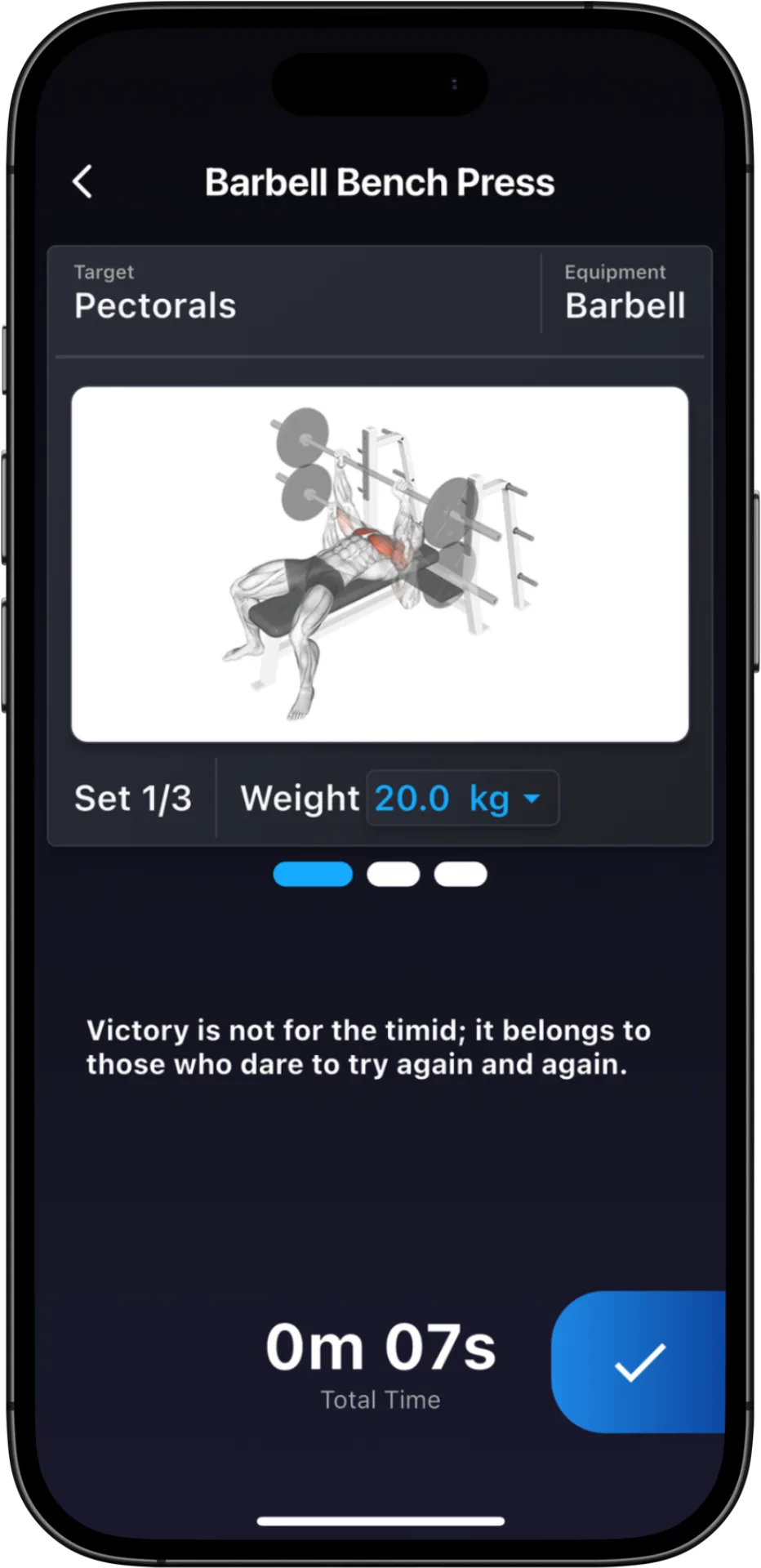
- Guided Exercises: With 1,000+ guided exercises and video demonstrations, FitFlow ensures you're performing movements correctly and effectively, contributing accurately to your EAT.
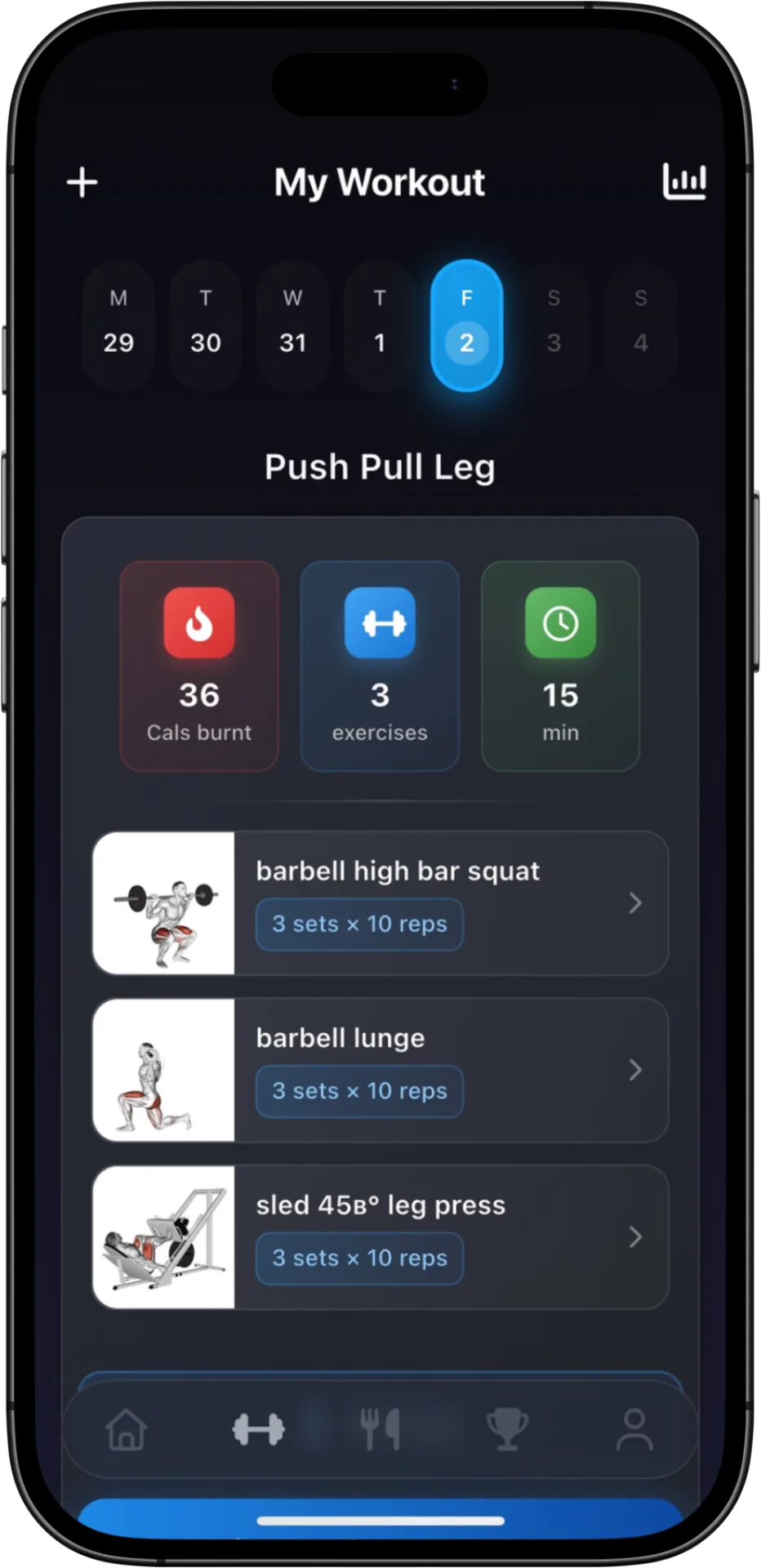
- Real-Time Tracking: Track sets, reps, and rest periods in real-time. Our intelligent form guidance and exercise recommendations ensure every workout counts.
- Customizable Journeys: Whether your focus is weight loss, strength training, or cardio, FitFlow offers customizable workout journeys that align with your TDEE goals.
Comprehensive Progress Analytics:
- Visual Charts: Beyond calories, FitFlow tracks your weight, body fat, steps, and water intake with intuitive visual charts, allowing you to see your progress at a glance.
- Personal Records & Badges: Stay motivated with personal record tracking and achievement badges that celebrate your milestones.
- Detailed Analytics: Dive deep into your fitness and nutrition data with detailed progress charts, helping you understand how your body responds and where adjustments might be needed.
FitFlow integrates seamlessly with Apple Health, Google Fit, Fitbit, and Garmin, consolidating all your health data in one place. With cross-device syncing and an offline mode, your progress is always accessible, empowering you to make informed decisions about your TDEE and calorie deficit from anywhere. Let FitFlow take the complexity out of calorie management, so you can focus on achieving your weight loss goals with confidence.
Empowering Your Weight Loss Journey with Knowledge
Understanding your Total Daily Energy Expenditure (TDEE) and strategically setting a calorie deficit is not just about losing weight; it's about gaining control, building sustainable habits, and fostering a deeper connection with your body's needs. By moving beyond guesswork and embracing a data-driven approach, you equip yourself with the knowledge to navigate the complexities of weight management effectively.
Remember that consistency, patience, and self-compassion are as crucial as the numbers themselves. There will be good days and challenging days, but with a solid understanding of TDEE and the power of a tool like FitFlow, you have everything you need to stay on track. Embrace the journey, celebrate every small victory, and empower yourself to achieve lasting health and wellness.

Sources & References

FitFlow Editorial Team
Fitness & Nutrition Editorial TeamCertified personal trainers & nutrition coaches
The FitFlow Editorial Team is a group of certified personal trainers, nutrition coaches, and fitness writers who translate exercise science and nutrition research into practical, actionable guidance. Every article is grounded in peer-reviewed sources and reviewed for accuracy before publishing.
Frequently Asked Questions
Who is this guide for?
This guide is for anyone focused on weight loss and looking for practical, sustainable progress.
How quickly can I apply these recommendations?
Most recommendations are designed for immediate implementation. Start with one change today, then layer improvements weekly.
How does FitFlow support this strategy?
FitFlow supports execution with AI-powered meal tracking, workout planning, and progress analytics that help you stay consistent.