The Ultimate Squat Guide: Variations & When to Use Them
Reviewed by the fitness & nutrition editorial team · Certified personal trainers & nutrition coaches
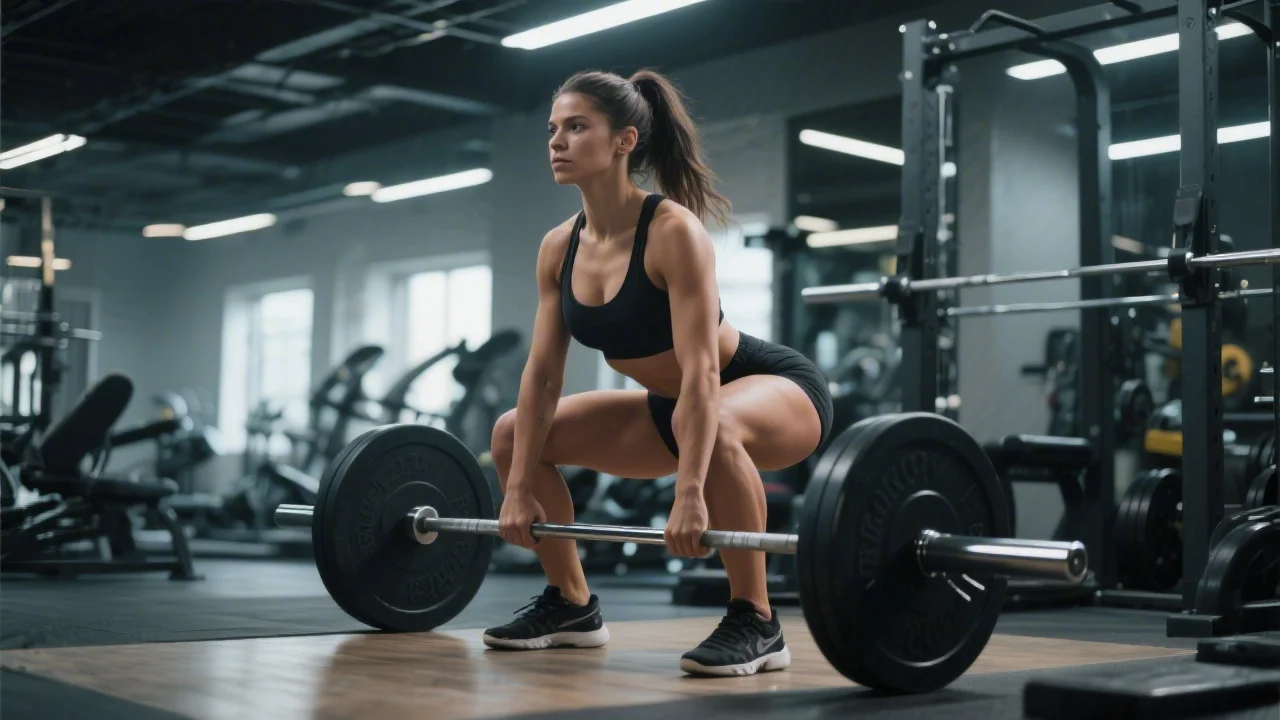
The King of Exercises: Why Squats Reign Supreme
The squat is more than just a leg exercise; it's a fundamental human movement pattern, deeply ingrained in our daily lives, from sitting down to picking up objects. As a compound movement, it engages multiple joints and muscle groups simultaneously, making it incredibly efficient for building overall strength, muscle mass, and improving functional fitness. From your quadriceps and hamstrings to your glutes, core, and even your upper back, a well-executed squat demands coordination and power from head to toe.
Beyond aesthetics and raw strength, squats are vital for:
- Functional Strength: They mimic real-world movements, enhancing your ability to perform daily tasks with ease and reducing the risk of injury.
- Muscle Growth: By engaging large muscle groups, squats are a potent stimulus for hypertrophy, leading to increased lean muscle mass throughout your lower body and core.
- Improved Mobility and Flexibility: Regular squatting through a full range of motion can significantly enhance hip, knee, and ankle mobility, as well as spinal flexibility.
- Bone Density: Weight-bearing exercises like squats contribute to stronger bones, helping to prevent osteoporosis.
- Core Strength: Maintaining an upright torso during squats heavily recruits your core muscles, leading to a stronger, more stable midsection.
Whether your goal is weight loss, muscle gain, or simply moving better, mastering the squat is an indispensable component of any effective fitness regimen. With FitFlow's Smart Workout Tracking, you can easily log your squat sessions, monitor your progress, and ensure you're consistently challenging yourself.
"The squat is the most important exercise for developing lower body strength and overall athletic performance. Neglecting it is neglecting your potential." - Strength and Conditioning Journal
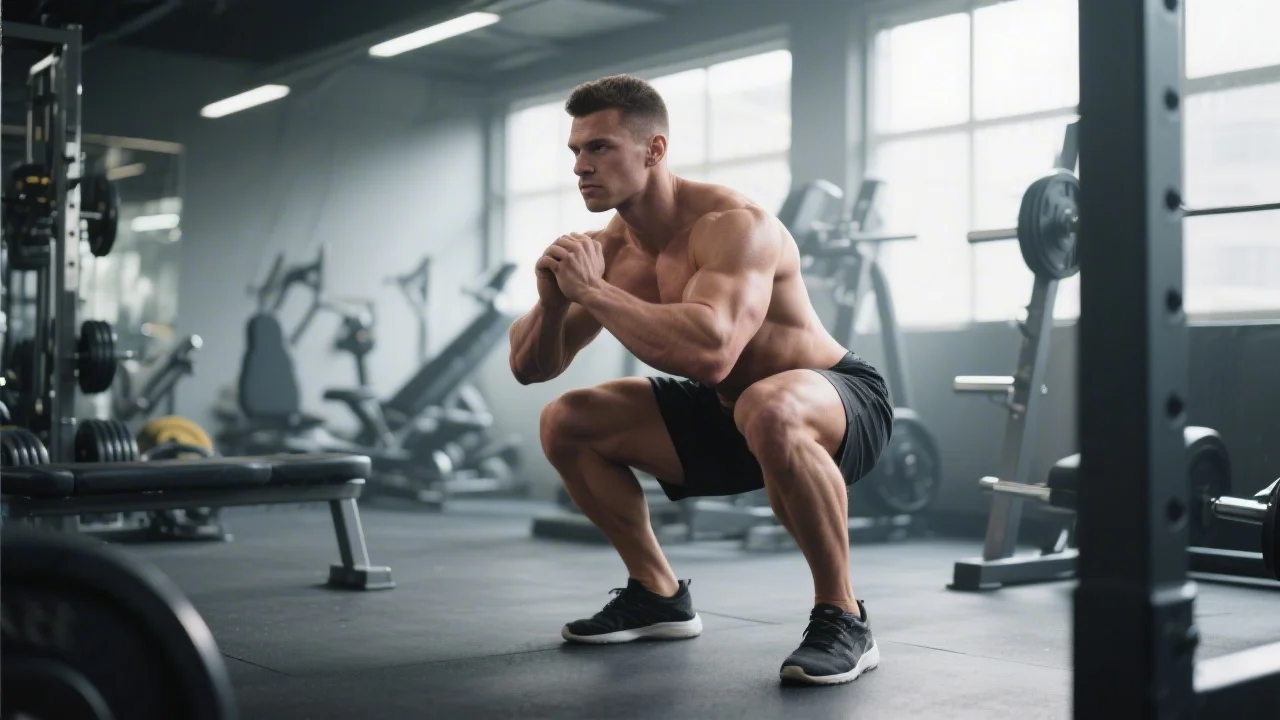
Building Your Foundation: Bodyweight & Goblet Squats
Before you load up a barbell, it's crucial to establish a strong foundation with proper form. The bodyweight squat and goblet squat are excellent starting points for beginners and essential tools for warm-ups, mobility work, and refining technique for lifters of all levels.
The Bodyweight Squat: Your First Step
The bodyweight squat is the purest form of the movement. It teaches you how to move your hips, knees, and ankles in coordination, focusing purely on mechanics without external load.
- How to Perform: Stand with feet shoulder-width apart, toes slightly pointed out. Initiate the movement by pushing your hips back and bending your knees, as if sitting into a chair. Keep your chest up, back straight, and descend until your thighs are parallel to the floor (or as deep as your mobility allows without losing form). Drive through your heels to return to the starting position.
- Benefits: Excellent for improving mobility, practicing proper depth, warming up muscles, and serving as a low-impact exercise.
- When to Use: Perfect for beginners learning the movement, warm-up routines, active recovery days, or as part of a high-repetition circuit.
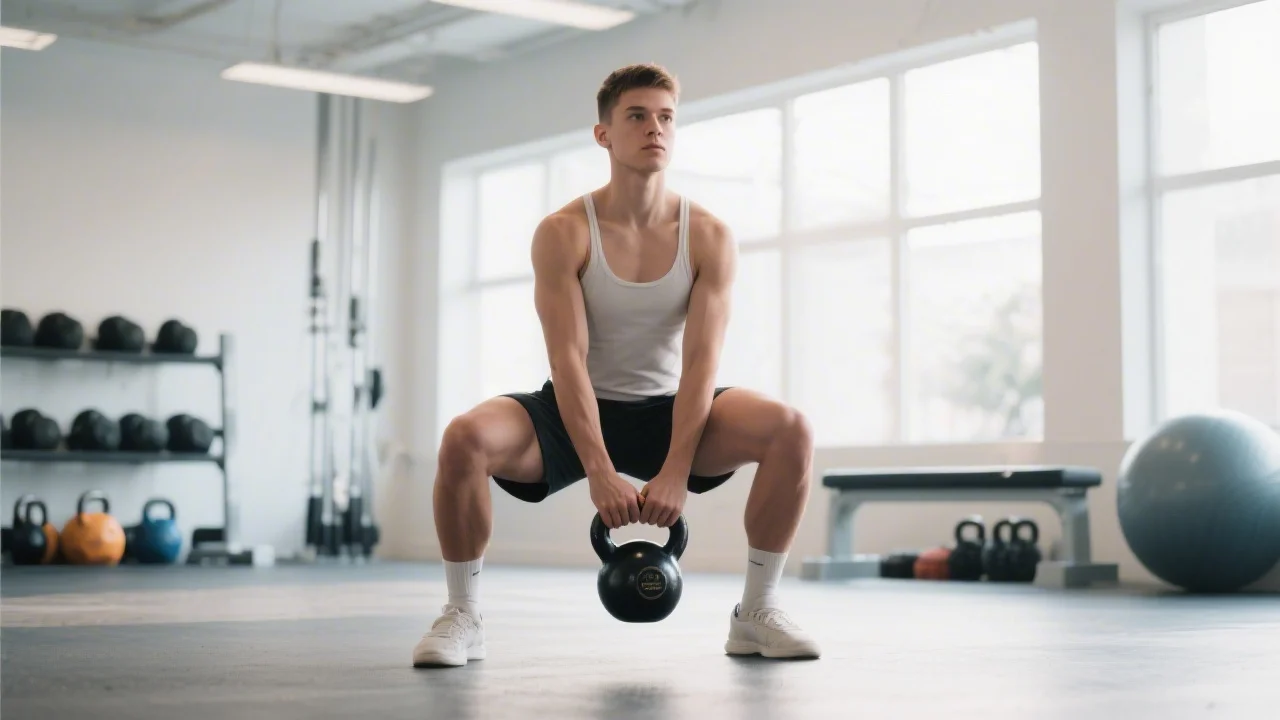
The Goblet Squat: The Beginner's Best Friend
The goblet squat introduces a light load, typically a dumbbell or kettlebell held against your chest. This external weight acts as a counterbalance, often making it easier to maintain an upright torso and achieve proper depth.
- How to Perform: Hold a dumbbell or kettlebell vertically against your chest with both hands. Stand with feet slightly wider than shoulder-width, toes pointed out. Keep your elbows tucked in and push your hips back, descending into a squat. Focus on keeping your chest up and the weight close to your body. Drive through your heels to stand back up.
- Benefits: Teaches proper squat mechanics, reinforces an upright posture, strengthens the core, and improves hip mobility. The front-loaded position naturally encourages deeper squats.
- When to Use: Ideal for beginners transitioning from bodyweight, individuals working on form correction, a great warm-up for heavier squats, or as a primary exercise for those who can't yet manage a barbell.
The Pillars of Strength: Barbell Back Squat & Front Squat
Once you've mastered the foundational movements, the barbell squat variations are where serious strength and muscle gains are made. These variations allow for the heaviest loads and are staples in powerlifting, Olympic weightlifting, and general strength training programs.
The Barbell Back Squat: The Classic Powerhouse
The barbell back squat is often considered the 'king' of all exercises. The bar rests across your upper back, allowing you to lift maximal weight and engage a vast array of muscle groups.
- How to Perform: Position the barbell across your upper traps (high bar) or slightly lower across your rear deltoids (low bar). Unrack the weight, take a deep breath, and brace your core. Initiate the squat by pushing your hips back and bending your knees, descending with control. Keep your chest up and back straight. Drive powerfully through your heels and midfoot to return to the starting position.
- Benefits: Unparalleled for building overall lower body and core strength, promoting significant muscle hypertrophy in the quads, glutes, and hamstrings, and enhancing bone density.
- When to Use: The cornerstone of strength training programs, powerlifting, and general muscle building. Best for those with solid mobility and core stability.
The Barbell Front Squat: The Quad & Core Builder
In the front squat, the barbell rests across the front of your shoulders, requiring a different level of upper back and core engagement. This variation often feels more challenging with less weight but offers unique benefits.
- How to Perform: Rack the barbell at shoulder height. Grip the bar with an Olympic clean grip (fingers under the bar, elbows high) or a cross-arm grip. Unrack the weight, keeping your elbows high and chest proud. Descend into a squat, focusing on keeping your torso as upright as possible. Drive through your heels, maintaining high elbows, to stand back up.
- Benefits: Places a greater emphasis on the quadriceps and upper back, often considered safer for the lower back due to the upright torso position, and significantly improves core stability and thoracic mobility.
- When to Use: Excellent for athletes needing strong quads and core (e.g., Olympic lifters, CrossFit), individuals with lower back concerns, or those looking to improve upper back posture and thoracic mobility.
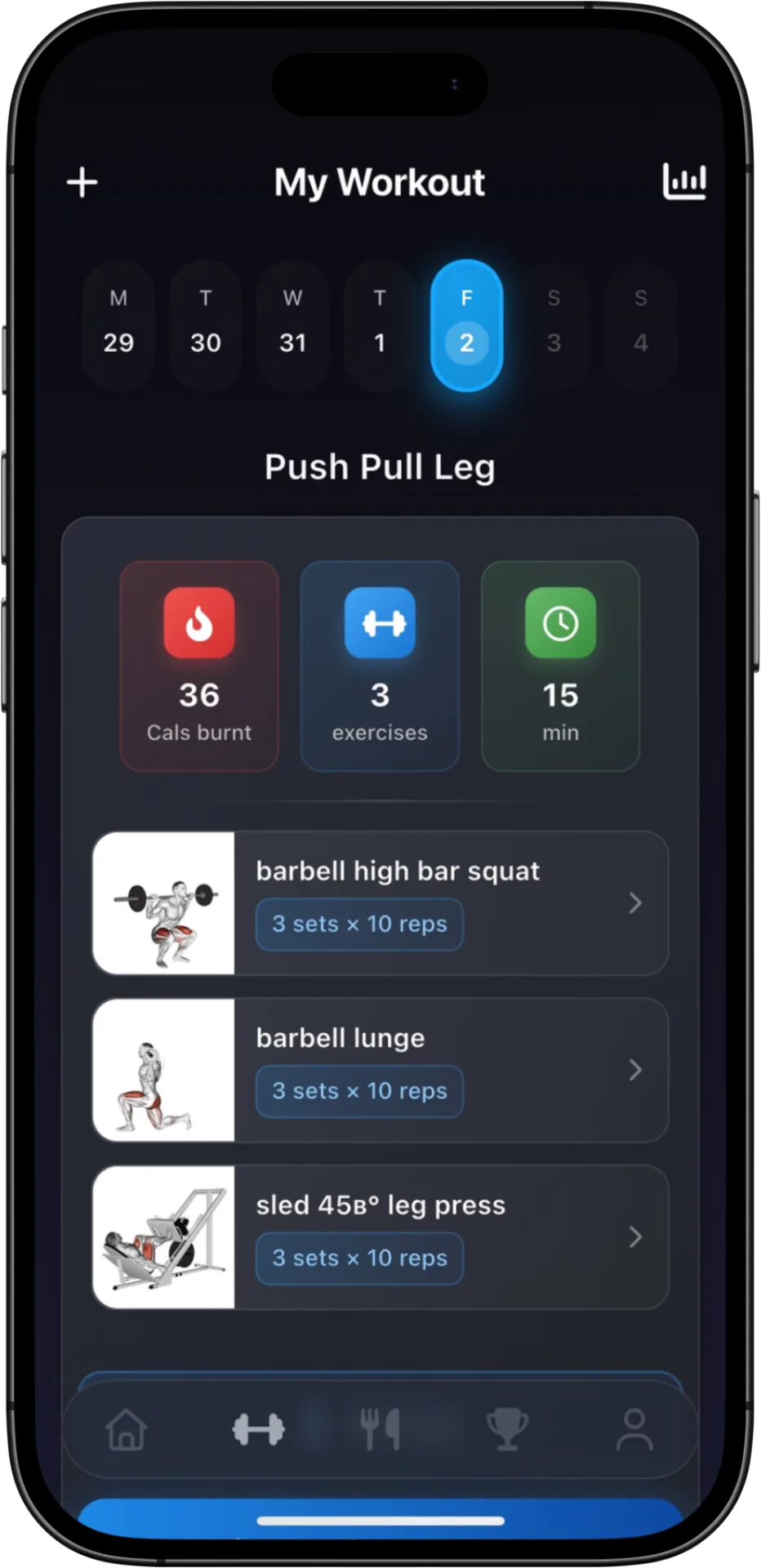
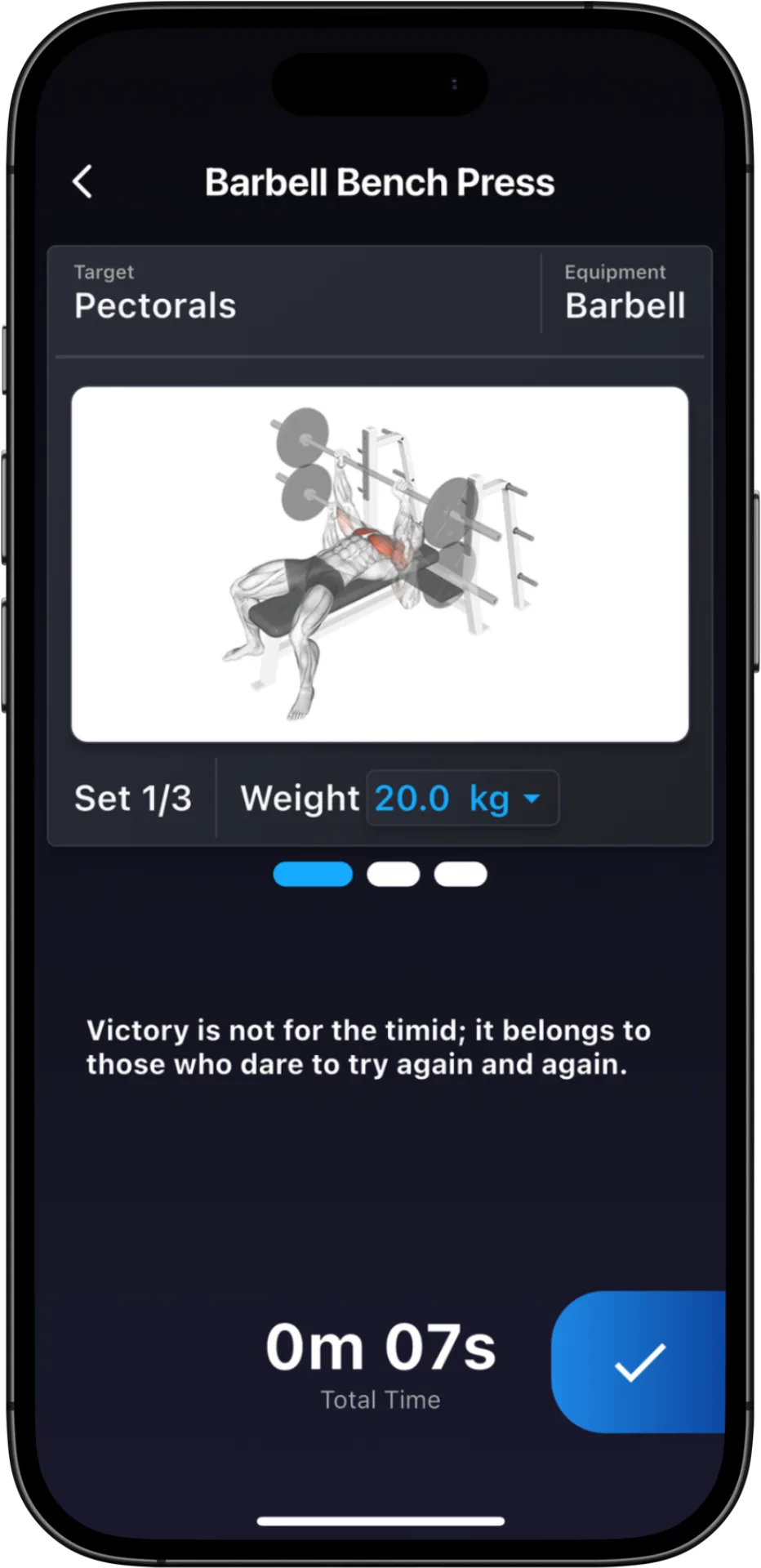
FitFlow's Smart Workout Tracking includes dedicated features for barbell workout tracking, allowing you to log your sets, reps, and weights with realistic weight defaults, ensuring you're always progressing safely and effectively.
Unilateral Strength: Split Squats & Lunges
While bilateral squats (using both legs) are fantastic for overall strength, unilateral exercises (one leg at a time) are crucial for addressing muscle imbalances, improving stability, and enhancing functional strength that translates directly to sports and daily life.
Bulgarian Split Squat: The Glute & Stability Dynamo
The Bulgarian split squat elevates one foot onto a bench behind you, placing a significant challenge on the working leg for strength, balance, and mobility.
- How to Perform: Stand a few feet in front of a bench or box. Place the top of one foot onto the bench behind you. Maintain an upright torso, brace your core, and descend by bending the front knee until your front thigh is parallel to the floor (or deeper if comfortable). The back knee should come close to the ground. Drive through the heel of your front foot to return to the starting position. You can hold dumbbells in each hand for added resistance.
- Benefits: Highly effective for targeting the glutes and quads, significantly improves balance and stability, addresses muscle imbalances between legs, and enhances hip flexibility.
- When to Use: Essential for athletes, correcting strength discrepancies, improving single-leg power, and building impressive glute development.
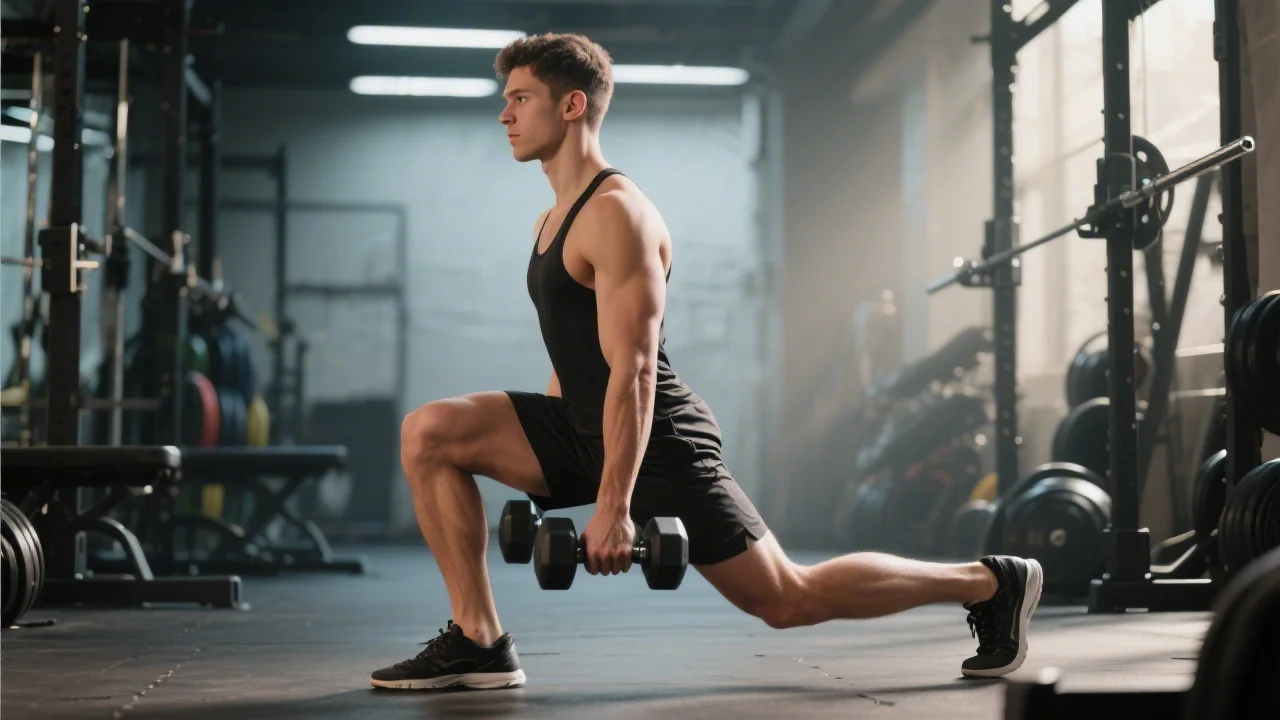
Reverse Lunge: Knee-Friendly & Glute-Focused
The reverse lunge involves stepping backward into a lunge, which often feels more stable and knee-friendly than a forward lunge.
- How to Perform: Stand tall with feet hip-width apart. Step one leg backward, lowering your hips until both knees are bent at approximately 90-degree angles. Ensure your front knee is directly above your ankle and your back knee hovers just above the floor. Push off the back foot to return to the starting position. Alternate legs or complete all reps on one side before switching. Dumbbells can be held in each hand.
- Benefits: Reduces stress on the knee joint compared to forward lunges, excellent for glute activation, improves balance, and builds functional leg strength.
- When to Use: Great for general fitness, warm-ups, individuals with knee sensitivity, or as a primary leg exercise for building glute and quad strength.
Specialized Squat Variations for Specific Goals
Once you have a solid grasp of the core squat movements, these specialized variations can help you target specific weaknesses, improve mobility, or train for particular athletic demands.
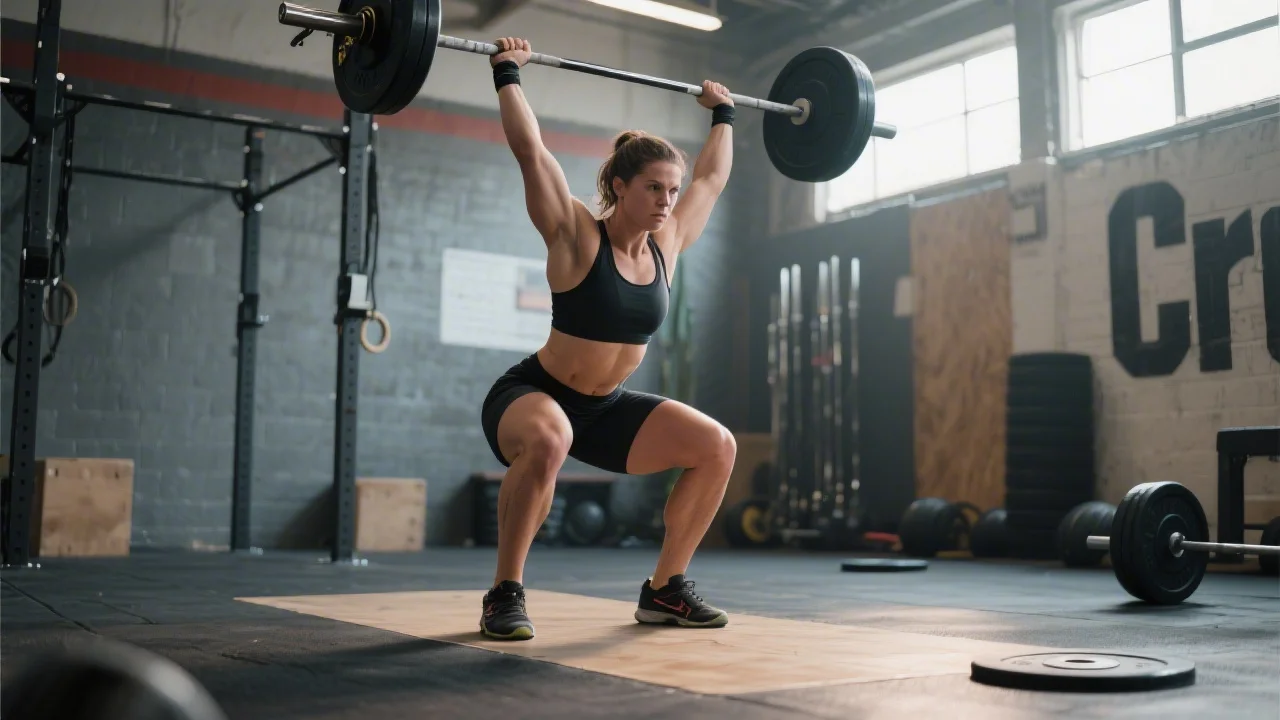
Overhead Squat: The Ultimate Mobility & Stability Challenge
The overhead squat involves holding a barbell (or broomstick/PVC pipe) overhead with arms extended, requiring extreme shoulder, thoracic, and hip mobility, along with incredible core stability.
- How to Perform: Hold a barbell overhead with a wide grip, arms locked out, and shoulders active. Maintain a rigid torso and descend into a full squat, keeping the bar directly over your midfoot throughout the movement. Focus on pushing your knees out and keeping your chest up.
- Benefits: Unrivaled for improving full-body mobility (especially shoulders and hips), enhancing core stability, and developing proprioception and coordination. It's a key exercise for Olympic weightlifters.
- When to Use: For advanced lifters looking to improve mobility, stability, and overhead strength. Excellent diagnostic tool for identifying mobility restrictions.
Box Squat: Depth, Power, and Form Reinforcement
The box squat involves squatting down until your glutes touch a box or bench behind you, then pausing briefly before standing back up. This variation is fantastic for teaching depth and developing explosive power.
- How to Perform: Set up a box or bench behind you at your desired squat depth (typically parallel or slightly below). Perform a regular back squat, driving your hips back as if to sit on the box. Lightly touch the box, pause for a second, then drive powerfully back up, engaging your glutes and hamstrings.
- Benefits: Reinforces proper squat depth, teaches hip drive, develops explosive power from a dead stop, and can be beneficial for those with knee issues as it reduces eccentric stress.
- When to Use: Powerlifters, athletes looking to increase explosiveness, or individuals needing to reinforce proper depth and form.
Pause Squat: Overcoming Sticking Points
The pause squat involves holding the bottom position of a squat for a specified duration (e.g., 2-5 seconds) before ascending. This builds strength in the deepest part of the squat and improves control.
- How to Perform: Execute any squat variation (back, front, goblet). Once you reach your deepest comfortable depth, hold that position for the prescribed time, maintaining tension and proper form. Then, drive powerfully back up.
- Benefits: Strengthens the bottom range of motion, improves positional strength, enhances core stability, and helps overcome sticking points in the squat.
- When to Use: For lifters struggling with the 'hole' of the squat, improving time under tension for hypertrophy, or refining technique.
Tempo Squat: Mastering Control and Time Under Tension
Tempo squats involve controlling the speed of each phase of the lift (eccentric, pause at bottom, concentric, pause at top). A common tempo might be 3-0-1-0 (3 seconds down, 0 second pause, 1 second up, 0 second pause).
- How to Perform: Perform any squat variation, consciously controlling the speed of each phase as specified by your tempo. Focus on maintaining tension and perfect form throughout.
- Benefits: Dramatically increases time under tension for muscle hypertrophy, improves motor control and body awareness, helps correct technical flaws, and builds incredible muscular endurance.
- When to Use: For hypertrophy phases, improving technique, building muscular endurance, or adding variety to your training.
Integrating Squats into Your Routine with FitFlow
No matter your fitness level or specific goals, FitFlow provides the tools to seamlessly integrate a variety of squat exercises into your personalized workout journey. Our app is designed to make every rep count and every session productive.
Smart Workout Tracking & Guided Exercises
With FitFlow's Smart Workout Tracking, you gain access to over 1,000 guided exercises, complete with video demonstrations. Whether you're learning the nuances of a goblet squat or aiming to perfect your barbell back squat, our intelligent form guidance helps ensure you're performing each movement safely and effectively. You can track your sets, reps, and rest periods in real-time, allowing you to focus purely on your execution.
Customizable Workout Journeys
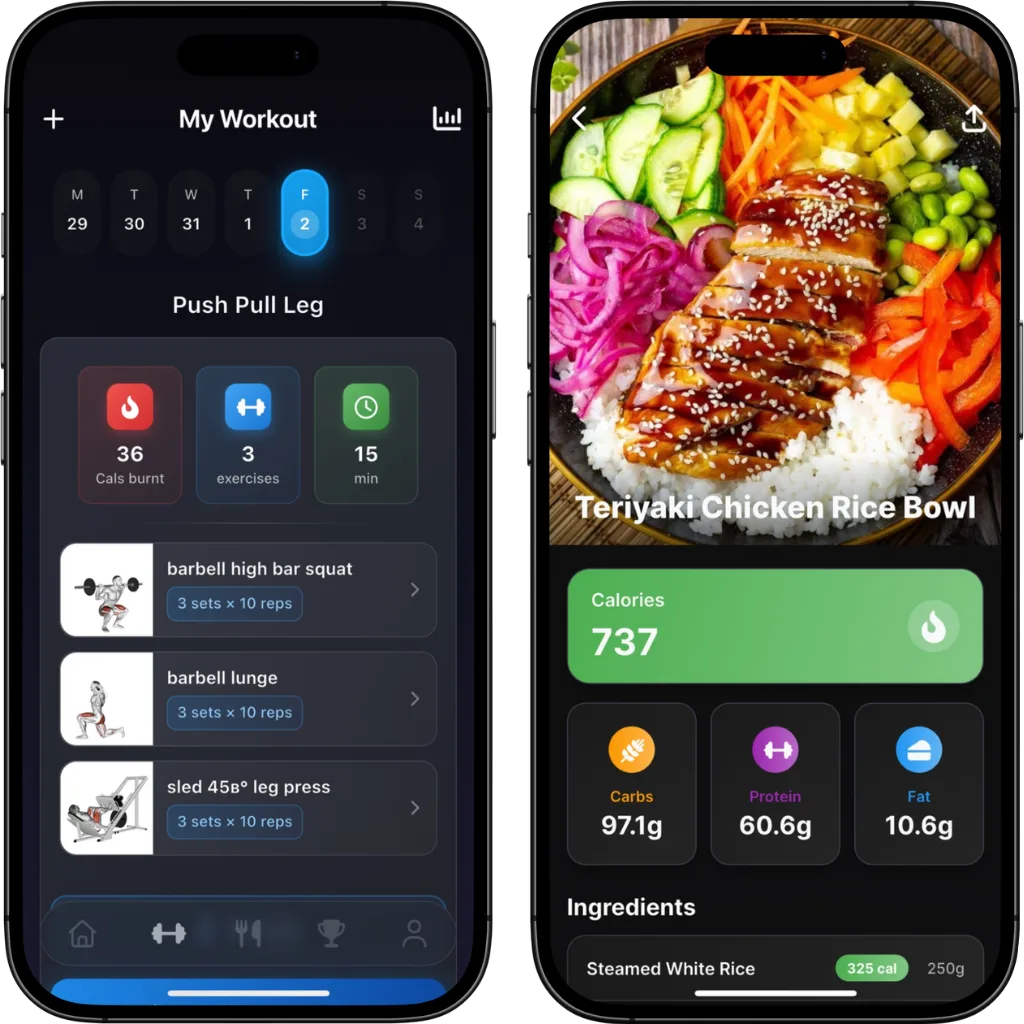
FitFlow offers customizable workout journeys tailored to your specific objectives, whether that's weight loss, strength training, or muscle gain. Our AI can recommend the most suitable squat variations based on your current progress and goals, ensuring you're always on the optimal path.
Progress Analytics & Goal Setting
Every squat variation you perform contributes to your overall progress. FitFlow's detailed fitness analytics and progress charts allow you to visualize your strength gains, track personal records (PRs) for different squat types, and celebrate milestone achievements. This data-driven approach keeps you motivated and informed, helping you make smarter training decisions.
Fueling Your Squats: Nutrition for Performance & Recovery
Performing challenging squat variations demands proper fuel. Your nutrition plays a critical role not only in providing the energy for your workouts but also in facilitating muscle repair and growth afterward.
- Protein: Essential for muscle repair and synthesis. Aim for sufficient protein intake throughout the day to support recovery from intense squat sessions.
- Carbohydrates: Your primary energy source. Complex carbohydrates provide sustained energy for your workouts and help replenish glycogen stores post-exercise.
- Healthy Fats: Important for hormone production and overall health, contributing to joint health and reducing inflammation.
- Hydration: Often overlooked, adequate water intake is crucial for performance, nutrient transport, and preventing cramps.
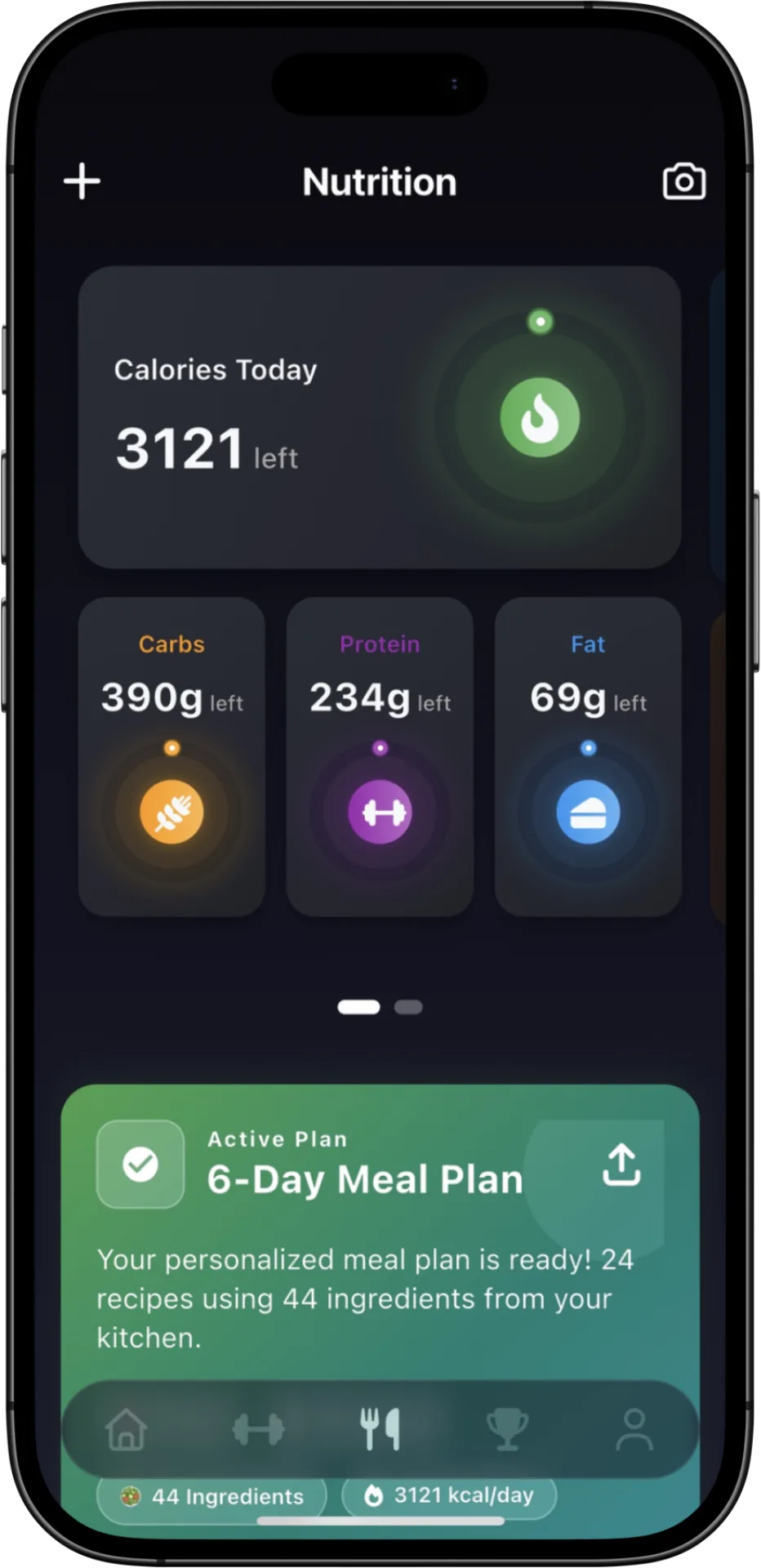
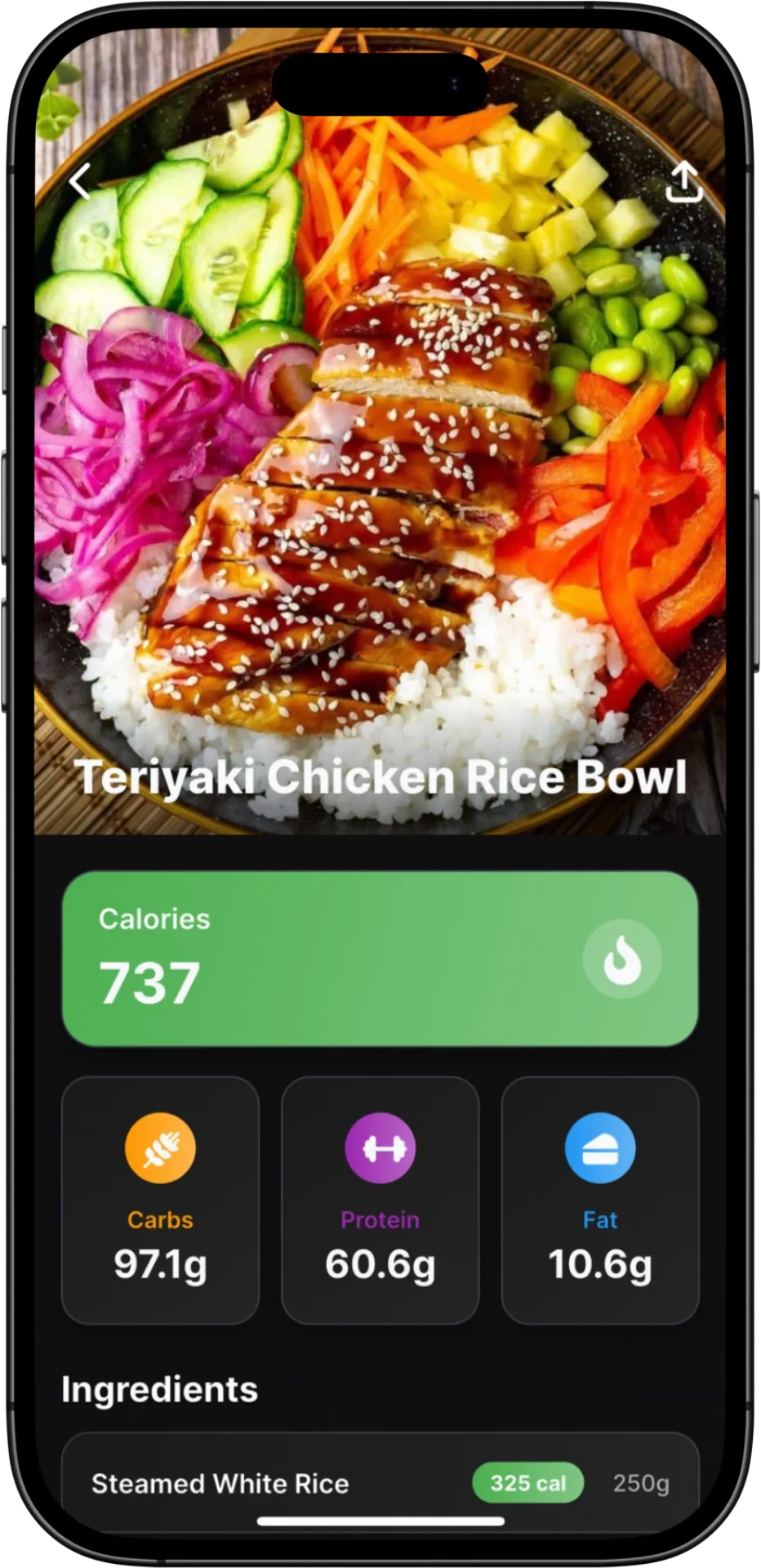
FitFlow simplifies your nutrition strategy with its AI Food Scanning & Nutrition Tracking. Simply snap a photo of your meal for instant calorie and macro breakdowns, or use our barcode scanner for packaged foods. With a database of 14M+ items and official data from major restaurant chains, you can easily ensure you're fueling your body optimally for your squat goals. You can even build custom meal plans tailored to your dietary preferences and track your water intake seamlessly.
Squat Smart, Squat Strong: Your Journey to Leg Day Mastery
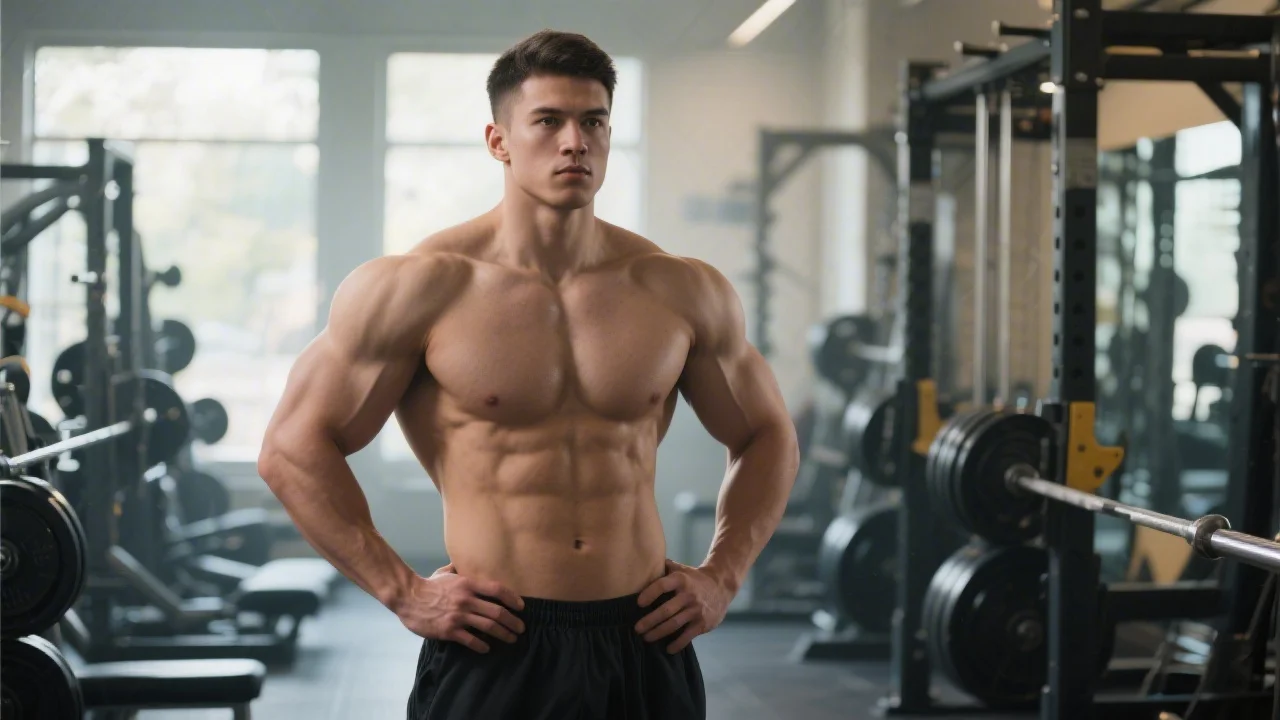
The squat is a powerful, versatile exercise that deserves a central role in your fitness routine. By understanding the various squat variations and when to deploy them, you can build a comprehensive training program that addresses your unique needs, strengthens your weaknesses, and propels you towards your fitness goals.
Remember to:
- Prioritize Form: Always choose proper technique over heavy weight.
- Listen to Your Body: Rest when needed, and don't push through pain.
- Progress Gradually: Continuously challenge yourself with increased weight, reps, or more advanced variations.
- Embrace Variety: Incorporate different squat types to keep your muscles guessing and prevent plateaus.
With FitFlow as your intelligent training partner, you have everything you need to embark on your journey to squat mastery. From guided exercises and personalized workout plans to detailed progress tracking and nutrition insights, we're here to help you squat smarter, stronger, and more effectively than ever before.
Sources & References

FitFlow Editorial Team
Fitness & Nutrition Editorial TeamCertified personal trainers & nutrition coaches
The FitFlow Editorial Team is a group of certified personal trainers, nutrition coaches, and fitness writers who translate exercise science and nutrition research into practical, actionable guidance. Every article is grounded in peer-reviewed sources and reviewed for accuracy before publishing.
Frequently Asked Questions
Who is this guide for?
This guide is for anyone focused on strength training and looking for practical, sustainable progress.
How quickly can I apply these recommendations?
Most recommendations are designed for immediate implementation. Start with one change today, then layer improvements weekly.
How does FitFlow support this strategy?
FitFlow supports execution with AI-powered meal tracking, workout planning, and progress analytics that help you stay consistent.